In this article
Heavy jet charter is the category people ask for by name and then, about half the time, do not actually need. The other half need it badly, and the trip falls apart without it. Late September is when that split gets sharp at the dispatch desk, because the calendar is turning over from domestic short hops to the things heavy metal exists for: transatlantic board travel, multi-country tours, holiday groups moving with a week of luggage, and the first serious round of long overnight sectors before the winter winds set in. Here is what the heavy category actually gives you, what it costs you in ways that are not dollars, and the four questions we ask before putting anyone in one.
What "heavy" means once you are standing in the cabin
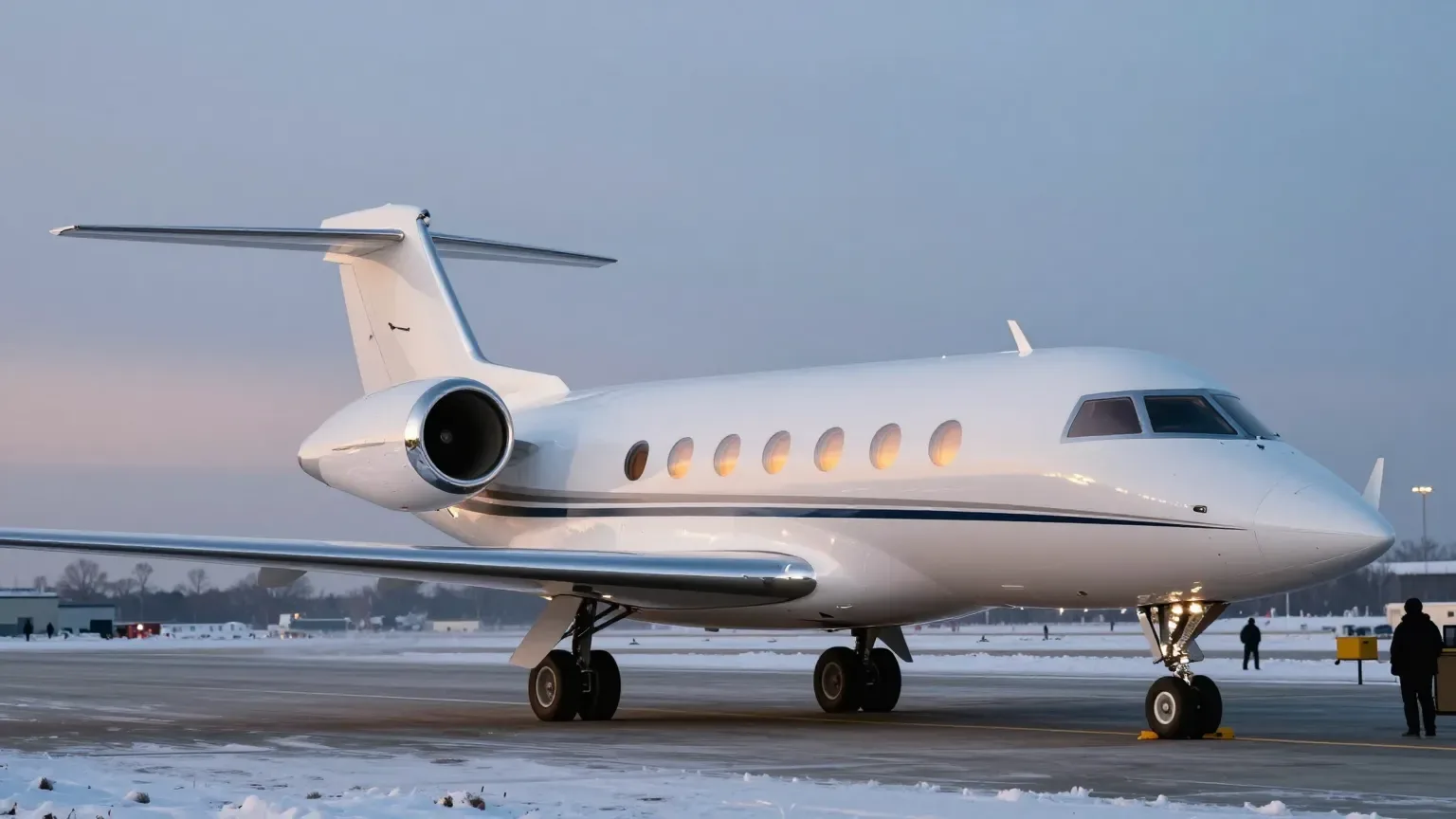
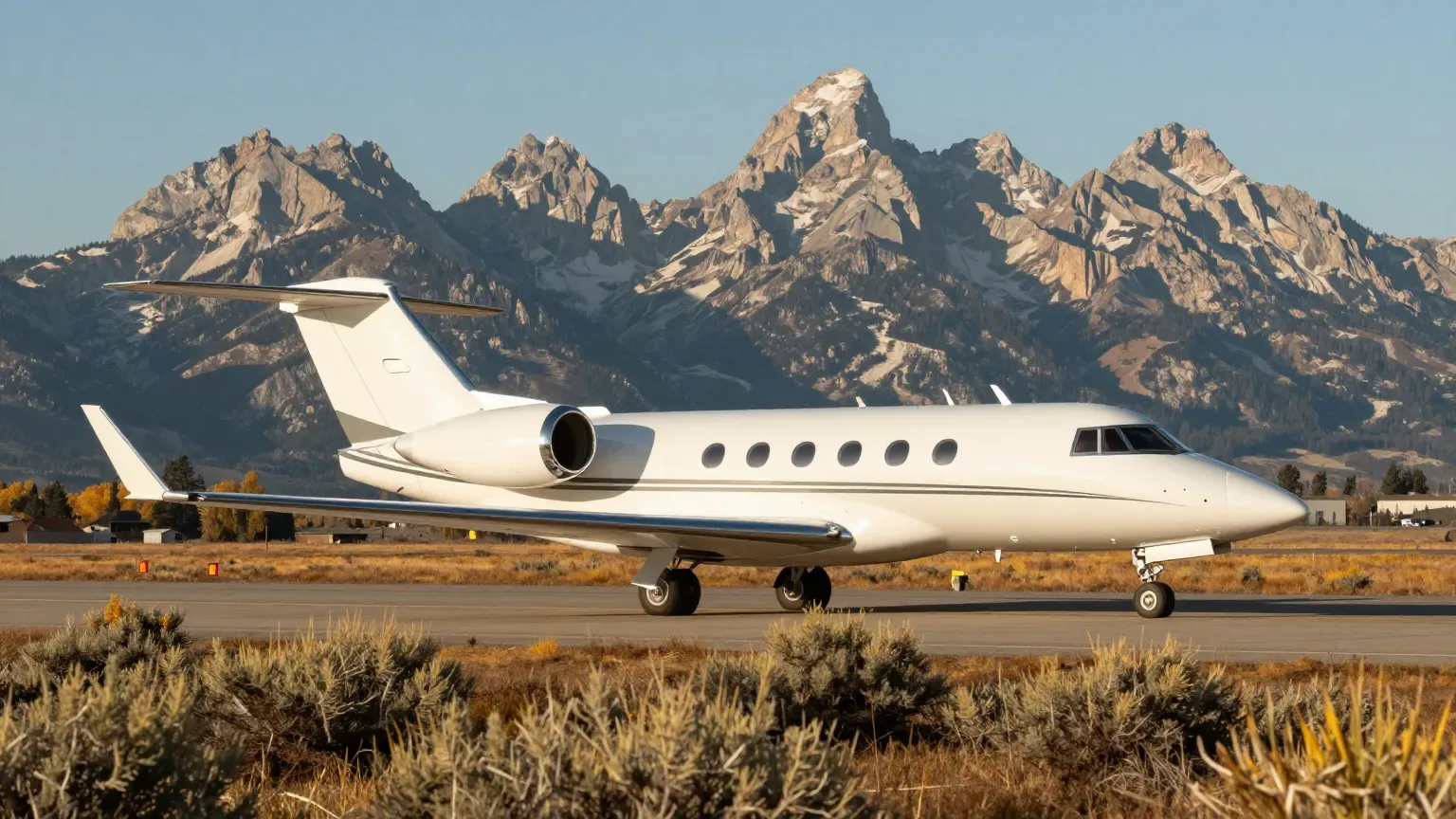
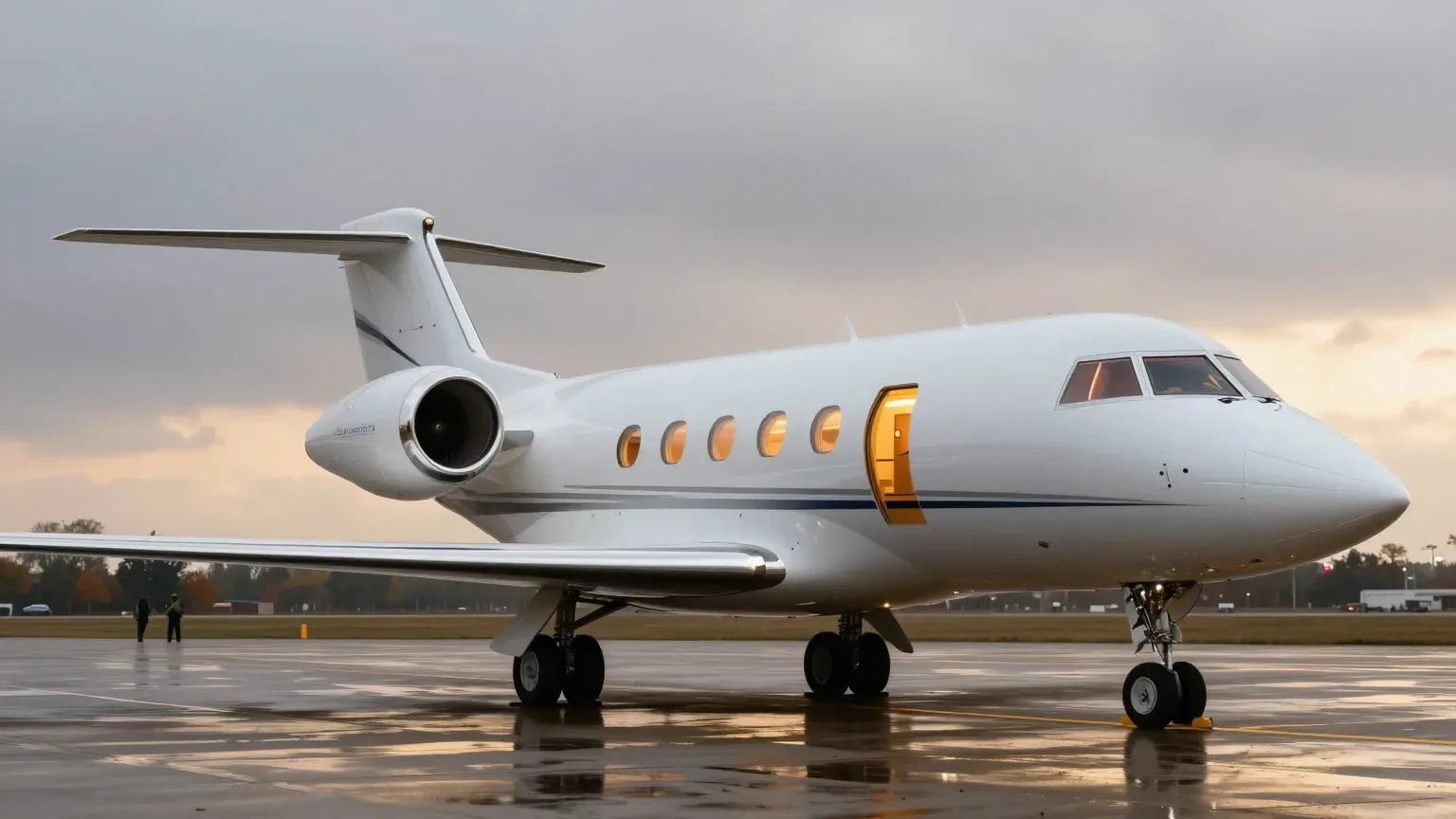
A heavy jet is defined less by range than by architecture. The cabin runs roughly 35 to 42 feet long with about six and a half feet of stand-up height, and, critically, it divides into two or three zones: a forward club, a mid dining setting, and an aft berth or stateroom. There is a stand-up galley a crew member can actually work in, two lavatories, and a vanity room. Most types in the class carry a flight attendant as standard rather than as an upgrade.
The airframes we quote most in the category sit around 4,000 to 4,350 NM of range with reserves, cruise in the high 450s to high 470s in knots, and carry ten to fourteen passengers depending on configuration. The Gulfstream G450 is the fourteen-seat, 4,350 NM answer. The Challenger 605 is the wide, twelve-seat cabin that flies the same missions with a slightly different personality. The Falcon 2000LXS is the one that will still take a shorter or higher-elevation field without a long conversation about runway numbers.
Those three are different arguments, not different badges. When dispatch offers you one over the others, it is usually because of the leg length, the bag count, or where the tail happened to be parked on Tuesday.
The mission profile that actually justifies it
Four profiles, and if your trip is not one of them, we will probably tell you to look one category down.
The first is a full-night sector. Once a leg crosses roughly seven or eight hours, the question stops being speed and becomes whether anyone can sleep flat. A berth that converts properly, a cabin divided so the people working are not lit up next to the people resting, and augmented crew so the flight can be flown legally end to end. That combination is the entire product.
The second is group volume with real luggage. Twelve to fourteen people going somewhere for a week is not a passenger-count problem, it is a baggage-hold problem. The class carries around 195 cubic feet across internal and external compartments, which is the difference between a ski group boarding and a ski group renegotiating.
The third is the multi-city tour. Five cities in six days, every leg flown ready rather than recovering, catering held aboard, nobody repacking between hotels. European and Asian tours land in this category more often than any other because the airplane becomes the fixed point in an otherwise moving itinerary.
The fourth is the transoceanic city pair that a smaller cabin can technically reach but should not. New York to London is the classic example. Super-midsize will do it eastbound on a good day. Coming back westbound, into the wind, with a full cabin and full bags, is where the good day runs out and a fuel stop appears in an itinerary that did not budget for one.
Where heavy stops being the right answer
Three honest failure modes.
Paying for a second cabin you never walk into. On a three-hour domestic leg with six people aboard, every feature that makes the category worth its number is dead weight. The super-midsize class delivers similar transatlantic range at a lower hourly cost, trading exactly the things a short trip does not use: the second cabin and the stand-up galley. If your longest leg is under five hours, start there and make heavy prove it should win.
Assuming full seats and full range arrive together. They almost never do. Payload comes out of fuel on every airframe ever built, and a fourteen-seat configuration loaded with fourteen people and their bags is a shorter-range airplane than the spec sheet suggests. We covered the general shape of this in our piece on how far a private jet actually flies, and it bites hardest in the heavy class precisely because the seat count tempts people to fill it.
Needing the leg that heavy cannot fly nonstop. New York to Tokyo, or a US east coast departure for Dubai with real reserves, is where the ultra long range category earns its premium. It adds roughly 1,500 NM and a third cabin zone, and on those specific city pairs it is not a luxury, it is the only way the trip happens without a technical stop in a place nobody wanted to visit.
Pricing a heavy mission without guessing
We do not publish hourly rates for this category, and you should be skeptical of anyone who does. Heavy pricing moves on fuel, positioning, crew duty limits, international handling and overflight fees, and how far the tail has to fly empty to reach you. A number quoted in the abstract is arithmetic homework, not a price.
The cost calculator prices a real route with the category preselected and returns an all-in figure. For the reasoning behind why two quotes for the same airframe on the same day come back different, the pricing guides are the short version. Two things worth holding in your head while you compare: federal excise tax of 7.5 percent applies to domestic charter and should be stated the same way in every quote you are weighing, and international sectors bring handling, permits, and customs into the number in ways a domestic leg never does.
There is also a cost you cannot see on the invoice, which is who is flying. Every tail we offer clears operator vetting before it reaches a quote, with an ARG/US Gold floor, Wyvern Wingman required on international and ultra-long-range work, and two in-type ATP pilots on every flight. On a thirteen-hour overnight sector with augmented crew, that is not a footnote.
The four questions we ask first
In this order, because the order matters.
How many people, and how many bags do they genuinely have? Not the number on the itinerary, the number that will arrive at the FBO.
What is the longest single leg, and which direction is it flown? Westbound and eastbound are different airplanes as far as fuel planning is concerned.
Does anyone need to sleep flat? If the answer is yes, the conversation is over and it is a heavy or better. If it is no, the category has to win on something else.
Is there a hard time on the far end? A fuel stop is forty-five minutes of inconvenience on a leisure trip and a missed meeting on a business one.
Answer those four and the category usually picks itself. If it comes back heavy, you are buying an airplane built for the specific problem of arriving ready after a long night in the air. If it comes back one class down, we will say so, because putting someone in too much airplane once is a faster way to lose them than quoting honestly and losing the booking.
Questions this raises
Asked at the desk
A heavy jet is a large-cabin aircraft with roughly 35 to 42 feet of cabin length, about six and a half feet of stand-up height, and two or three separate zones including an aft berth or stateroom. It typically carries ten to fourteen passengers with a stand-up galley, two lavatories, and a flight attendant as standard.
The airframes we quote most in the category run about 4,000 to 4,350 NM with reserves, which covers most transatlantic city pairs and US transcontinental legs in either direction. Full seats and maximum range rarely arrive together, because payload always comes out of fuel.
Usually not, if the longest leg is under about five hours and nobody needs to sleep flat. Super-midsize offers similar transatlantic range at a lower hourly cost, and it is the better starting point unless group size, bag volume, or a full-night sector rules it out.
Ultra long range adds roughly 1,500 NM and a third cabin zone on top of what heavy offers. It matters on specific city pairs such as New York to Tokyo, where a heavy jet would need a technical stop that an ultra long range aircraft does not.
Yes. The 7.5 percent federal excise tax applies to domestic charter regardless of aircraft category. International sectors add handling, permits, and customs costs instead, so make sure any two quotes you compare are stated the same way.
JetNine dispatch desk · Updated September 29, 2026 · aircraft · heavy · seasonal