In this article
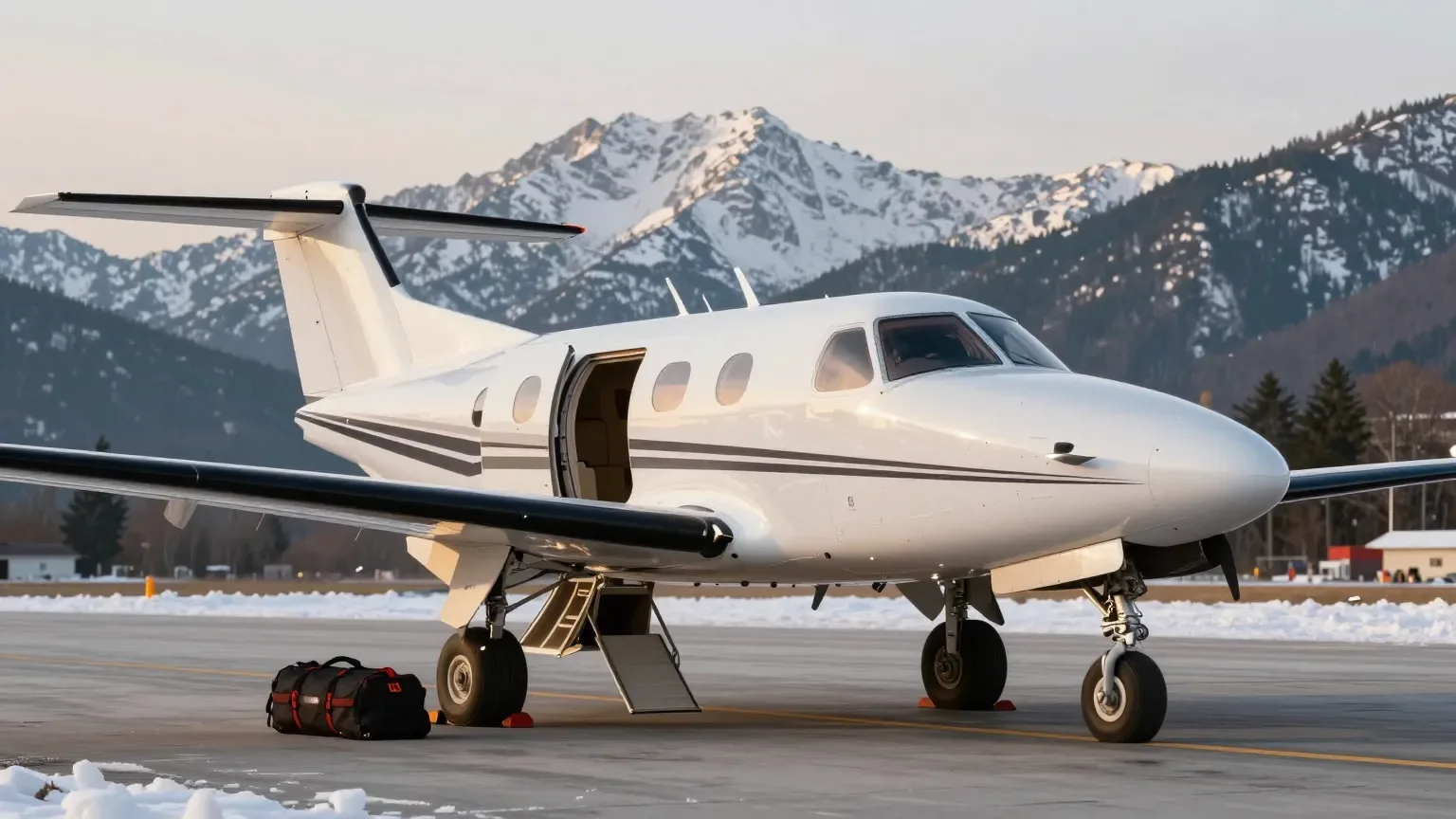
Ask the desk for a PC-12 NGX charter in the first week of October and we can usually guess the trip before anyone describes it. Ski bags that have not been unzipped since April, a dog, four to six people, and a destination airport with a runway number the airlines have never heard of. The Pilatus PC-12 NGX is the aircraft that keeps coming up in those conversations, and not because it is the fastest thing on the ramp. It is the one whose shape matches the mission.
Here is what a single turbine actually buys you going into the season, where it stops making sense, and how to brief a desk so the quote that comes back is the right aircraft rather than the first available one.
The October version of this airplane
Mountain travel in autumn is a planning problem before it is a flying problem. Resort-town fields start collecting snow on the shoulders, daylight shrinks at both ends, and the small airports that serve the good valleys do not get longer just because demand went up. Meanwhile the first wave of winter-house traffic has not arrived, which means aircraft and crews are still moveable on short notice.
That window favors aircraft that are not fussy about where they land. The turboprop category exists for exactly this: regional legs where the limiting factor is the runway, the ramp or the weather rather than the distance. Most of the trips we see in this window are under two and a half hours of flight time. On a leg that short, the aircraft that can park closest to where you are actually going beats the aircraft that cruises faster between airports you do not want.
What the single turbine buys you
The specifics are on the PC-12 NGX page, but the ones that change decisions are these. Eight seats in the typical layout, about 1,803 nm of range with reserves, 290 knots of cruise, a cabin 16 feet 11 inches long and 4 feet 10 inches tall, and a service ceiling of 30,000 feet.
Read those together and the picture sharpens. Eight seats is more than most light jets offer, and the cabin is close to light-jet dimensions in length and width. The cruise speed is where you pay. The ceiling matters more than people expect in winter, because 30,000 feet is often above the weather in the mountain west but not always above it in the east, which is a routing conversation rather than a dealbreaker.
The part that does not show up in a spec table is field performance. A PC-12 works off runways that a jet of similar cabin size would decline, including short, high and imperfectly surfaced ones. In October that means a valley airport with an unplowed margin, or a field where the published runway length looks fine until you add elevation, temperature and a contaminated surface. The turboprop absorbs those variables with room left over.
One more structural point. The PC-12 is commonly flown single pilot in charter service, and the rules around that are worth understanding rather than worrying about. We wrote the full explanation of what one seat changes separately, because it deserves more than a paragraph. The short version: the operator's Part 135 certificate, its training program and its weather minimums are what govern, and those are things you can ask about by name.
Where the light jet wins
We would be doing you no favors by pretending this aircraft is the answer to everything. Put a PC-12 NGX next to a Phenom 300E and the trade is clean.
The light jet cruises around 464 knots against 290, carries roughly 2,010 nm of range against 1,803, and holds about 74 cubic feet of baggage against roughly 40. On the Los Angeles to Aspen leg, those numbers work out to a little under two hours in the jet and a little over two and a half in the turboprop. On a 600 nm hop with a late start and a hard dinner reservation, that difference is the whole argument.
So the rule of thumb we use at the desk is unglamorous. If the airports at both ends are long, paved and busy, and the clock is the constraint, price the jet. If either end is short, high, unimproved or weather-prone, or if the cargo is awkward, price the turboprop and ask what it costs you in time rather than assuming it costs you nothing. Ask for both. A good desk should hand you both itineraries without being prompted twice.
Skis, boards, dogs and the cargo door
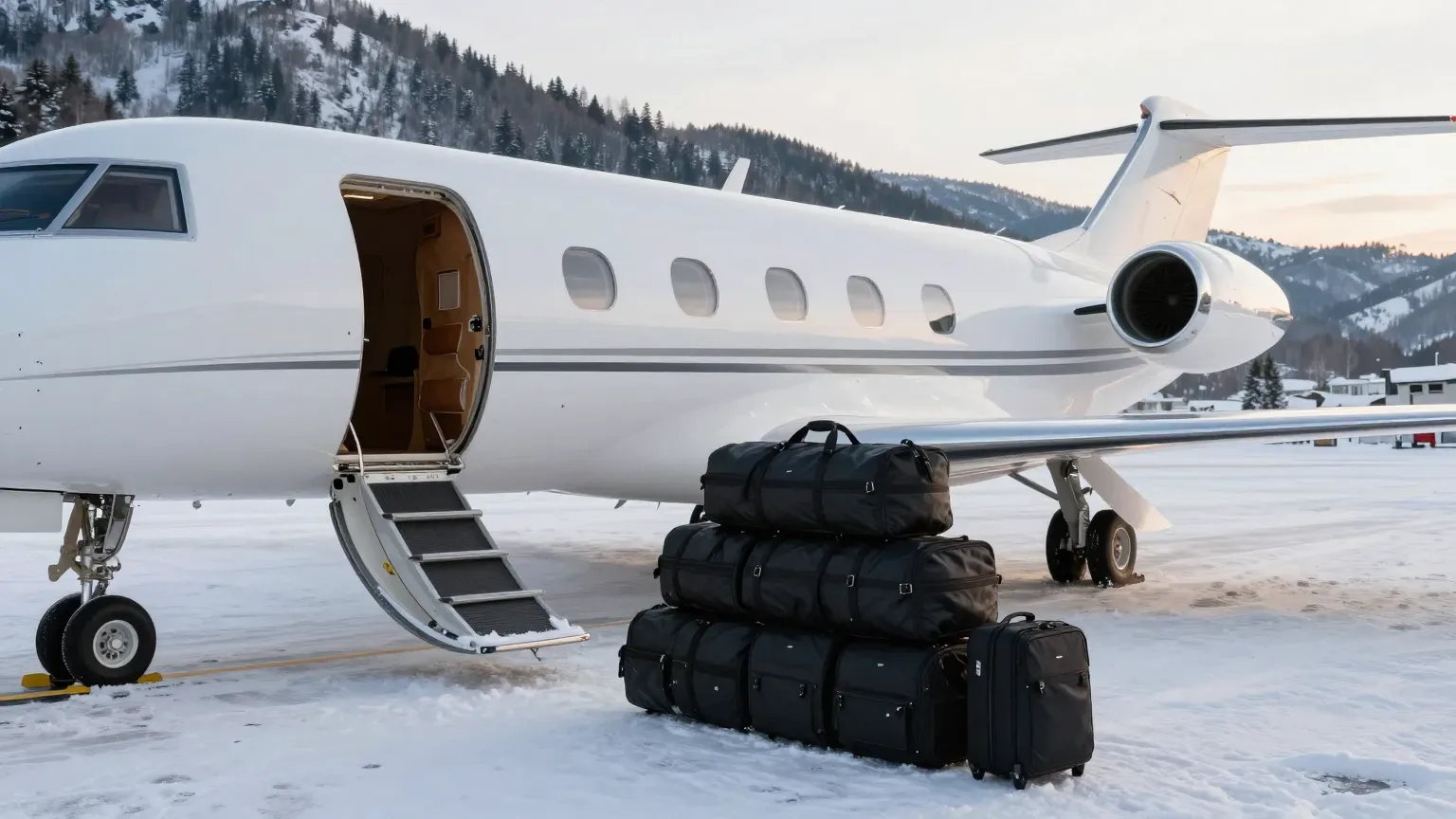
The feature that sells this airplane in October is the one nobody puts in a headline: a large aft cargo door that loads at waist height. Skis, boards, golf bags in the shoulder season, a crated dog, a stroller and a pack-and-play all go in through an opening sized for them rather than threaded into a tapered jet compartment.
Two cautions, because the cargo door solves shape and not weight. Roughly 40 cubic feet is a real number and it fills faster than you think once hard ski cases are involved. And every pound of bag competes with every pound of fuel and passenger, which is the actual constraint on a short-field departure at elevation. Four people with light bags and eight people with ski kit are different airplanes operationally even though the seat count says otherwise.
Tell us the bags by item and dimension rather than by count. Our baggage limits guide covers the general case, but for a trip like this the useful version is a sentence: six people, four pairs of skis in hard cases, two boot bags, one 40 pound dog in a crate that measures 36 by 24 by 26. That sentence gets a real answer. "A normal amount of luggage" gets a shrug and a caveat.
How to brief the desk
Four things make the difference between a quote you can act on and a quote you have to relitigate.
Name both airports, not the cities. The whole case for this aircraft rests on which specific field you are using, and in mountain country the second-closest airport is frequently the better plan anyway.
Give the real passenger count and the real bag list. Everything on a short-field departure flows from weight.
Say what your actual constraint is. Arrival time, departure flexibility, pet policy and cabin access for someone who does not love stairs are all things we can design around if we know about them before we go shopping.
And put a number on your flexibility. A day either side, or a morning instead of an afternoon, changes what is available in this window more than anything else you can control.
Then compare the whole itinerary rather than the hourly figure. Positioning, crew duty, airport charges, the 7.5% federal excise tax on domestic charter and any de-icing all land in the same total, and an aircraft that looks cheaper per hour can easily finish higher. The cost calculator will get you an indicative range for a specific pair of airports, which is the only kind of number worth comparing.
Ski season is not here yet. That is precisely why this is the month to work out which aircraft fits your valley, before every other household on your street figures out theirs.
Questions this raises
Asked at the desk
Eight seats is the typical published layout. On a short-field departure at elevation, the practical number depends on how much baggage and fuel you need, so confirm the combination with dispatch rather than the seat count alone.
About 40 cubic feet, loaded through a large aft cargo door that takes skis, boards and crated dogs without threading them through a narrow compartment. List bags by item and dimension so the loading and weight can be confirmed before you travel.
Often, yes. The PC-12 operates from shorter, higher and less improved runways than a comparable light jet, which is why it shows up on mountain and regional trips. Suitability is still confirmed airport by airport against runway length, elevation, surface condition and weather.
Charter flights are flown under the operator's FAA Part 135 certificate, with its own training program, maintenance program and weather minimums. Ask the operator about those by name, and review the safety and vetting material before you book.
If both airports are long and paved and the clock is your constraint, the light jet is usually faster door to door. If either end is short, high or weather-prone, or the cargo is awkward, the turboprop is the better fit. Ask for both itineraries and compare total time, not hourly figures.
JetNine dispatch desk · Updated October 8, 2026 · aircraft · turboprop · pc-12 · seasonal