In this article
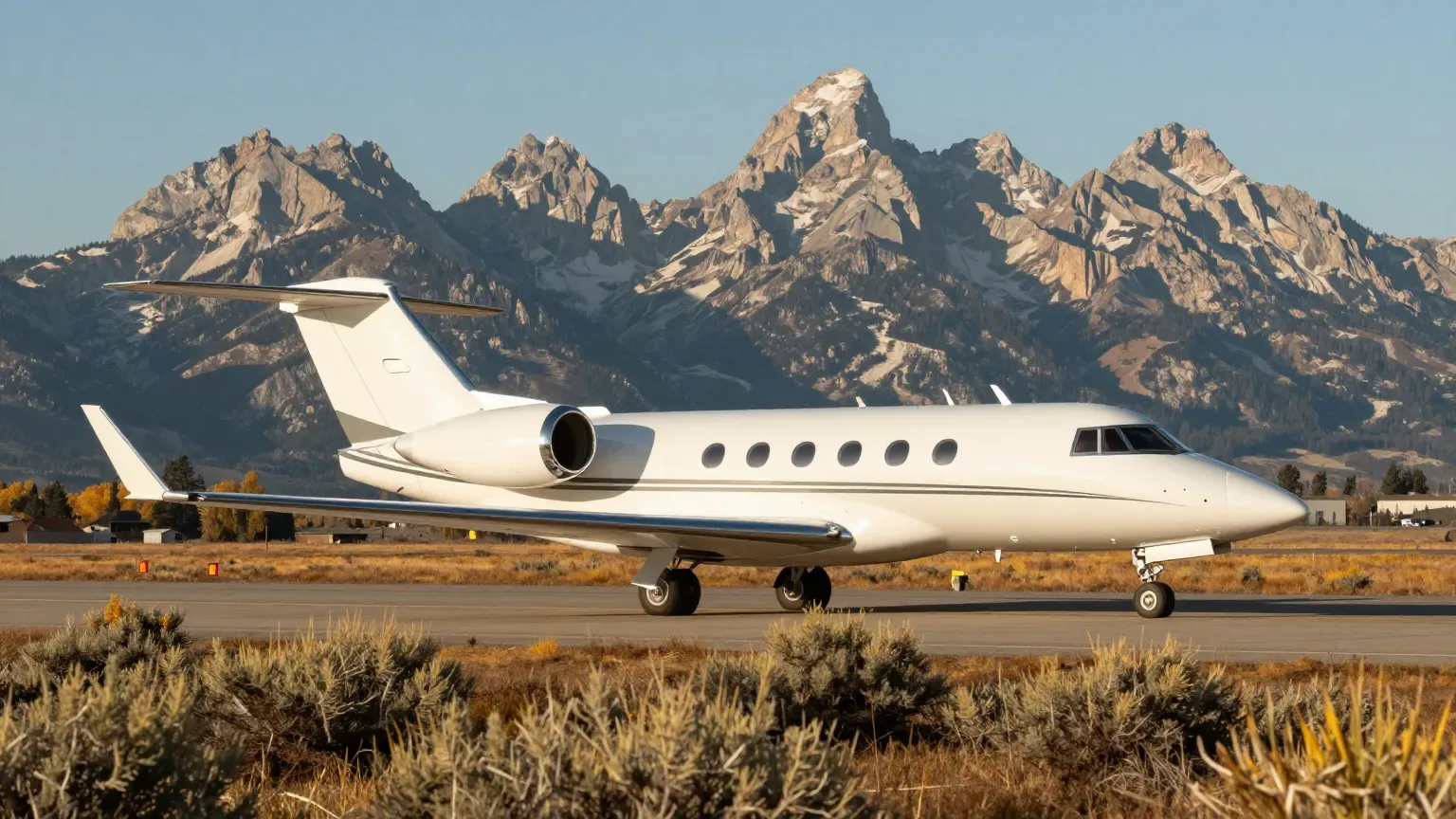
A private jet Los Angeles to Jackson Hole is 670 nautical miles and roughly two hours in the air, which makes it one of the easier western lanes on paper and one of the more particular ones in practice. The distance is not the hard part. The field at the far end is. Jackson Hole sits high, in a valley ringed by terrain, inside a national park, with a single runway and a ramp that fills up fast when the season turns. October is the month when none of that is working against you, and that is exactly why we tell people to fly it now.
The lane in plain numbers
We quote this one out of Van Nuys (KVNY) into Jackson Hole (KJAC). Van Nuys because it is where the fleet lives and where the drive from most of the Westside and the Valley is shortest at the hours people actually leave. Burbank and Santa Monica both work and dispatch will price them if your morning starts somewhere else, but the difference usually shows up in minutes of car time, not in the quote.
The leg is 670 NM direct. A light jet does it in about two hours, a super-midsize in a little under. For four passengers with luggage, the wizard on the Los Angeles to Jackson Hole route page recommends a light jet, and we agree with it most of the year. That is a rare piece of good news in mountain flying: the lane is short enough that you are not paying for range you will not use.
Where the recommendation moves is when the party grows past five, when the bags are ski bags rather than duffels, or when the forecast puts a real headwind on the nose. Price both and look at the gap yourself in the cost calculator before you decide the bigger cabin is extravagant. On a two hour leg it often is not.
Why October is the quiet half of the year here
Jackson runs two busy seasons and two quiet ones. Summer is park traffic, which ends when the lodges close. Winter is ski traffic, which starts in earnest around Thanksgiving and does not let go until spring. In between sits a shoulder window, roughly late September through mid November, when the elk are bugling, the aspens are doing what aspens do, and the airport is behaving itself.
Three things get easier in that window. Ramp parking is available, which matters more than most first time charter clients expect. Crew and aircraft are not already committed to holiday blocks, so a Thursday request for a Saturday departure is a normal conversation rather than a rescue mission. And the weather, while never guaranteed in Wyoming, is between the summer heat that punishes takeoff performance and the winter systems that close the valley.
The one caveat is that quiet cuts both ways. Fewer flights into the valley means fewer repositioning legs out of it, so the empty leg board is thinner on this pair in October than it will be in December. If you are flexible on dates and want to fly on someone else's reposition, set the watchlist now and expect the matches to cluster around the holidays.
The field picks the aircraft, not the other way round
KJAC is the only commercial airport inside a US national park, and that status shapes operations more than scenery. The airport runs under a use agreement with the National Park Service that carries noise limits and restrictions on night movements, so the departure you want at 9pm in December may not be a departure the field will take. Dispatch confirms the current window with the FBO before we quote a late slot, every time, because the rules are specific and we would rather tell you no on a Tuesday than on the ramp.
Then there is elevation. The field sits above 6,000 feet, which means every takeoff calculation starts with less air than the same aircraft would find at Van Nuys. Add summer heat and the performance penalty is real: an aircraft that lifts full fuel and six passengers out of a sea level runway may need to leave something behind at Jackson on a warm afternoon. That something is usually fuel, which turns a nonstop home into a fuel stop in Salt Lake or Rock Springs. In October, with cooler mornings, the math relaxes. It is one more reason the shoulder season is the forgiving one.
Terrain is the third factor. The approaches are mountain approaches, and the published procedures reflect it. We will not put a crew on this lane who has not flown it, which is less a marketing line than a scheduling constraint: it narrows the operator list and it is the first thing our review checks. The specifics of what we require are on the pilot standards page, and they do not flex for Jackson.
Weather you cannot see from the Valley
Los Angeles tells you nothing about Jackson. You can push back from Van Nuys in seventy degrees and clear skies and land two hours later into a valley that has decided to do something else entirely. Mountain wave, rapid ceiling changes and valley fog are all ordinary here, and in late fall the first real snow events start arriving without much warning.
The practical version of that for a passenger is simple. Build a little slack around the arrival, especially if there is a dinner reservation or a connecting drive into the park. Give dispatch a working mobile number rather than an assistant's desk line. And decide in advance what you want to happen if the valley closes, because the answer is either an alternate like Idaho Falls with a drive, or a delay, and it is a much calmer decision made the day before than made in the air.
If the trip is really about skiing rather than about Jackson specifically, other mountain lanes out of Los Angeles carry a different set of constraints and a different booking rhythm. Worth pricing two if the mountain is negotiable.
Booking it without a scramble
For October and early November, a week of lead time is comfortable and three days is usually fine. For anything inside the holiday window, treat the ski season as a different product: aircraft, crew and ramp space all get committed early, and the lane stops behaving like a two hour hop and starts behaving like a reservation.
What we need from you is short. Dates, passenger count, rough bag situation (skis and boot bags change the aircraft more than people expect), and whether the return is fixed or open. Quotes on this pair come back in under half an hour during desk hours, with the all-in number including fuel, crew, landing fees and the 7.5% federal excise tax, locked at acceptance.
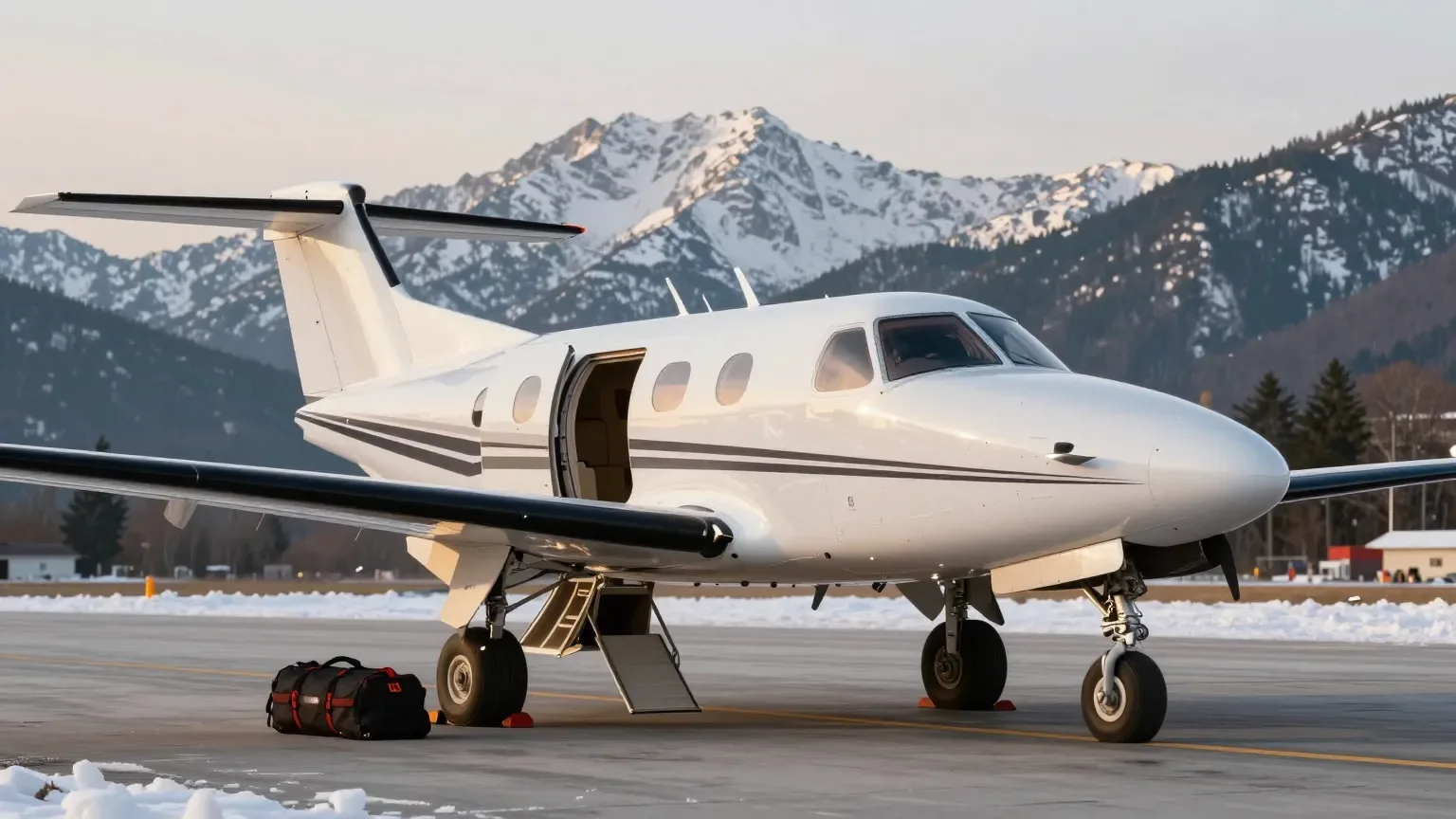
If you are flying this lane regularly rather than once, the Los Angeles city guide covers which field suits which part of town and how the departure airports compare on traffic. And if you want to see what a light jet actually looks like for four people and real luggage before you commit, the Phenom 300E page is the honest version of the cabin.
Call the desk. We have flown this valley in every month it allows, and October is the one we would pick.
Questions this raises
Asked at the desk
The leg is 670 nautical miles direct from Van Nuys to Jackson Hole. A light jet is in the air about two hours, a super-midsize a little under that, and winds on the day move the number more than the aircraft does.
Van Nuys (KVNY) on the Los Angeles end and Jackson Hole (KJAC) on the Wyoming end. Burbank or Santa Monica can replace Van Nuys if the drive is shorter for you, and dispatch will quote whichever field suits your morning.
It is the easiest window of the year on this lane. Ramp parking is available, aircraft and crew are not yet committed to holiday blocks, and cooler temperatures remove the summer takeoff performance penalty that comes with a field above 6,000 feet.
KJAC sits inside Grand Teton National Park and operates under a use agreement that carries noise limits and restrictions on night movements. We confirm the current window with the FBO before quoting a late slot rather than finding out on the ramp.
A week of lead time is comfortable in October and early November. From Thanksgiving onward, aircraft, crew and ramp space get committed early, so treat a peak ski date as a reservation rather than a two hour hop.
JetNine dispatch desk · Updated October 4, 2026 · routes · jackson hole · seasonal · aircraft