Gulfstream
Gulfstream G450
Up to 14 passengers · 4,350 nm published range · 476 kt cruise.
New York to Europe with a full manifest — the heavy-jet mission, done by the aircraft that defined it. Ask for the exact seating plan and baggage allowance.
A cabin that fits the way you travel.
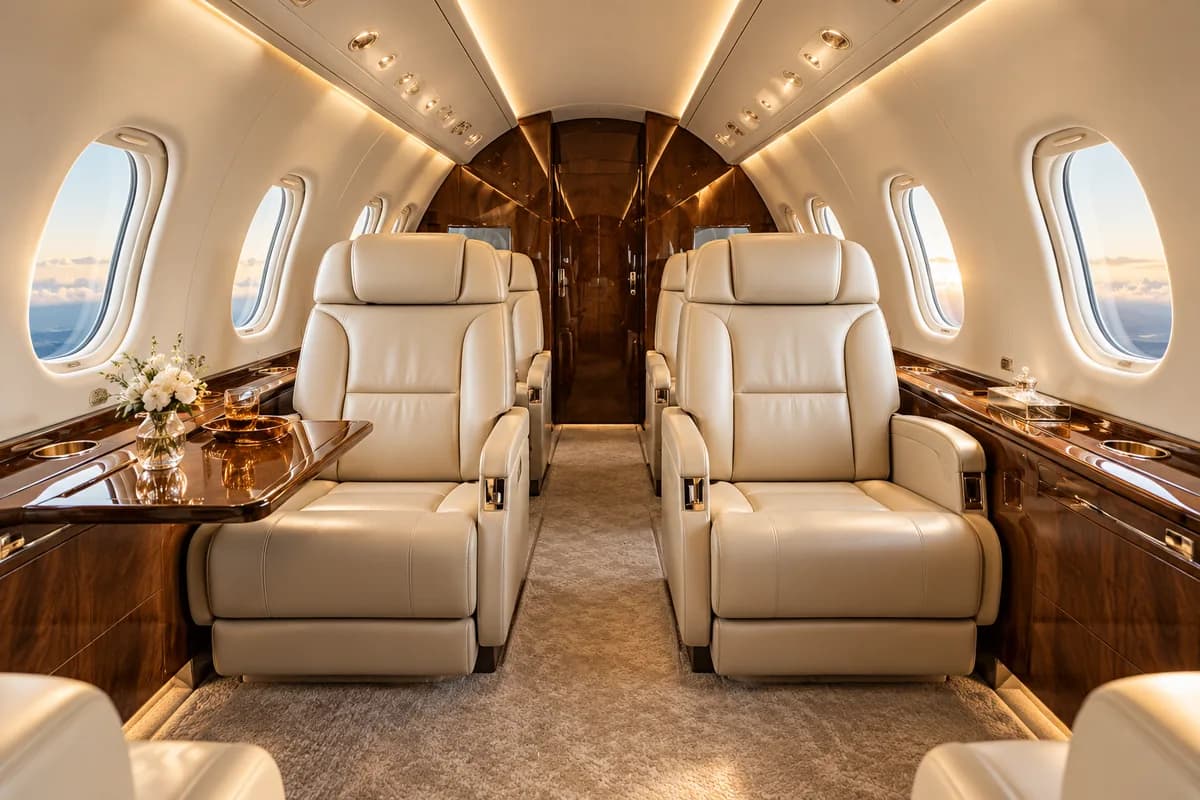
Two cabins, a galley a chef can work in, beds that are actually beds. Twelve to fourteen passengers transoceanic with crew rest. The category for full-night legs and groups that need to arrive ready, not recovering.

NYC to Tokyo or Shanghai non-stop. East-coast US to Dubai or Mumbai with reserves.
Augmented crew, real beds, divided cabin. The plane that lets the dispatcher fly the longest legs legally.
Twelve to fourteen passengers with luggage for a week. Two zones for sleep and work in parallel.
Five cities, six days, every leg flown ready. The category most multi-stop European or Asian tours need.
Representative models to discuss — not live aircraft inventory. We source the right aircraft per trip from a network of vetted Part 135 operators.
Up to 14 passengers · 4,350 nm published range · 476 kt cruise.
New York to Europe with a full manifest — the heavy-jet mission, done by the aircraft that defined it. Ask for the exact seating plan and baggage allowance.
Up to 12 passengers · 4,000 nm published range · 459 kt cruise.
Twelve-passenger working flights: boardroom layout, transatlantic range, sensible heavy-jet pricing. Ask for the exact seating plan and baggage allowance.
Up to 10 passengers · 4,000 nm published range · 482 kt cruise.
Heavy-jet cabins into short strips — London City-style fields, island runways, mountain valleys. Ask for the exact seating plan and baggage allowance.
Model specifications are a starting point. Your quote should identify the actual aircraft and operator.
A typical heavy cabin runs 35 to 42 feet, six-and-a-half feet of stand-up height, and divides into two or three zones — forward club, mid dining, aft berth or stateroom. Stand-up galley with full crew, dual lavatories, vanity room, full Wi-Fi with Ka-band streaming. Most types carry a flight attendant standard.
Airports, direction, winds, passenger load, baggage and fuel reserves all matter. Request an assessment for the aircraft offered.
Compare the complete itinerary — not the hourly figure alone.
Read the matching model’s cabin and performance assumptions.
Ask for the operating carrier’s certificate and aircraft charter authorization.
Compare total pricing, additional charges and cancellation terms.
No. Some layouts use convertible seats or divans. Confirm the sleeping arrangement, privacy and number of sleeping positions on the aircraft offered.
Published range is a planning reference. The operating carrier confirms nonstop capability for your route, load, winds and fuel reserves.
Not always. Confirm attendant, catering and fitted Wi-Fi on the specific aircraft, and whether they are billed separately.
The operating carrier, aircraft, included items, additional charges, and the change and cancellation terms.
Share your route, dates, passengers and baggage.