In this article
Every October the desk has the same conversation three times a week. Someone wants to be in London, Dubai or Tokyo between the holidays, they have been quoted a nonstop, and they want to know whether the nonstop will survive contact with January. Ultra long range jet charter is the category people reach for when "no fuel stop" is the actual brief, and winter is the season that tests whether the brief holds. The honest answer is that the aircraft is only one of four variables, and the other three move with the weather.
Why the nonstop question gets harder in winter
The jet stream is strongest in the cold months. That is good news in one direction and expensive news in the other. An eastbound Atlantic leg picks up a tailwind and arrives early. The westbound return climbs into the same river of air head on, burns more fuel to cover the same ground, and sometimes cannot carry enough of it to make the field with legal reserves.
Nothing about the airplane changed between those two legs. The air did. This is why a city pair that flew comfortably nonstop in September can come back in January with a fuel stop penciled in, and why we would rather have that conversation in October than at the FBO on the 27th of December.
What the ultra category actually buys you
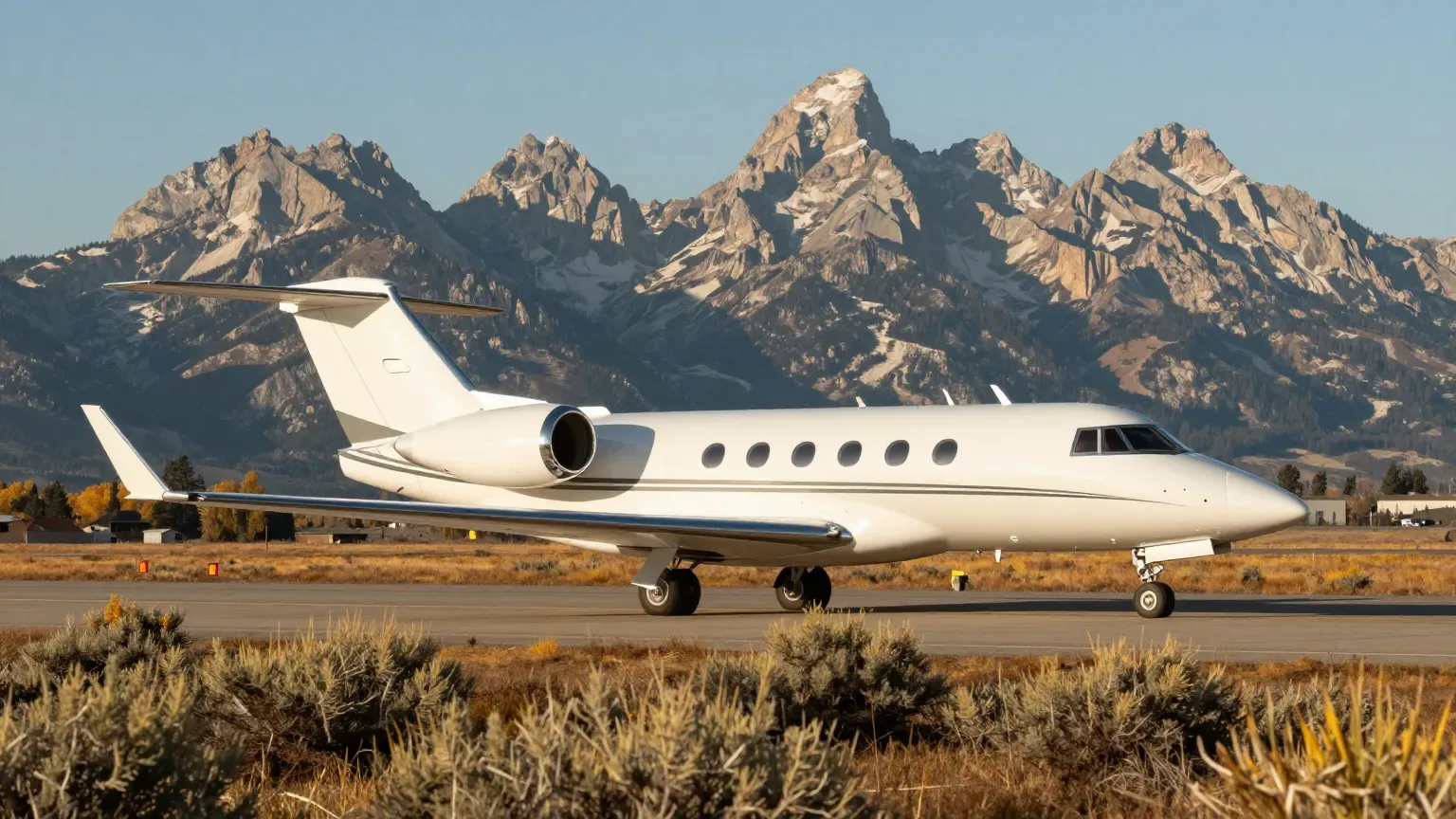
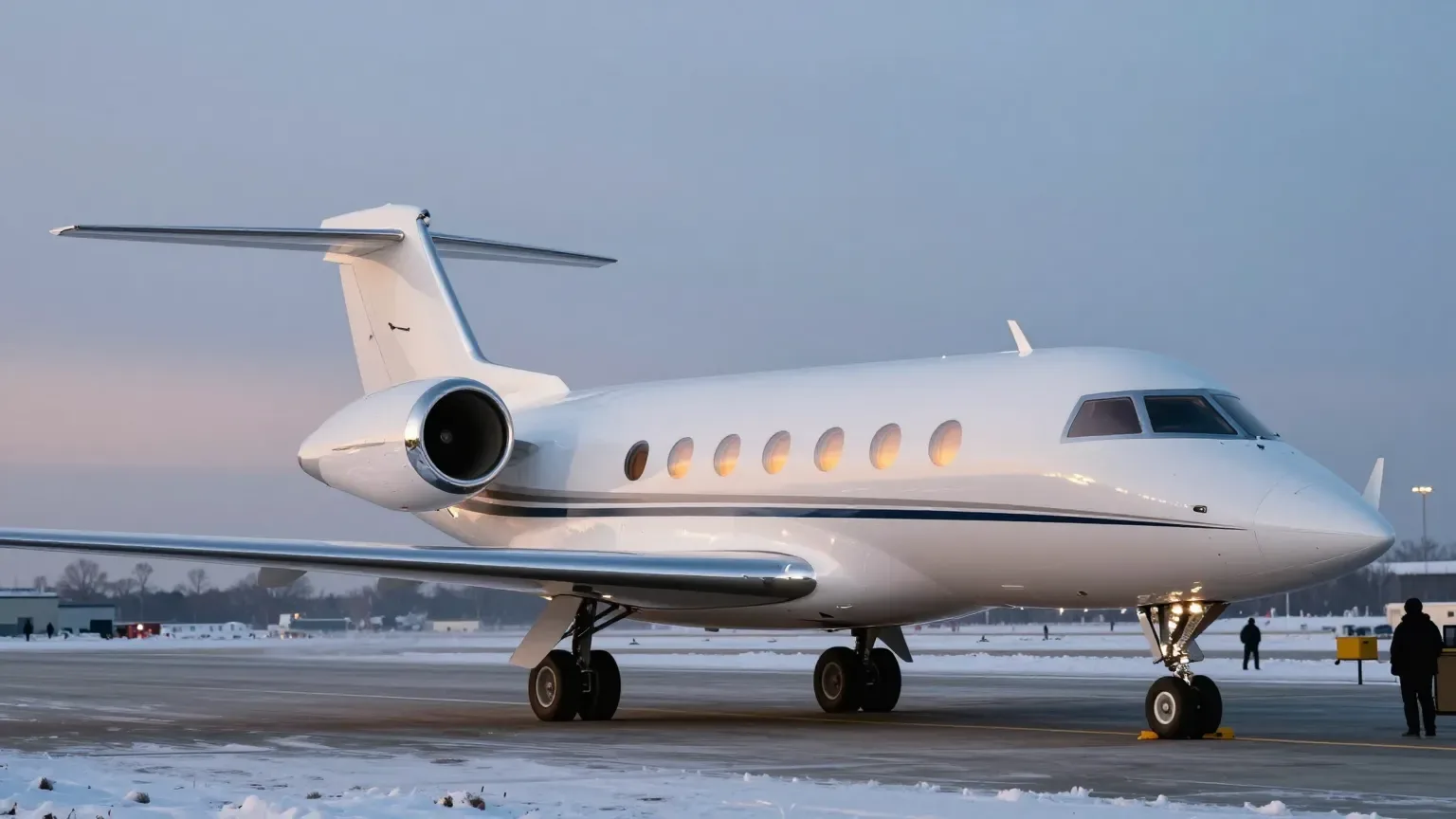
The ultra long range category sits at the top of the civil fleet: roughly fourteen to nineteen passengers depending on layout, published maximum range near 7,500 nautical miles, cruise around Mach 0.90, and a cabin running forty-five to fifty-four feet with three zones, a conference area, an aft stateroom with a real bed, and crew rest kept separate from passengers. Most types in the category fly with an augmented flight crew and a dedicated attendant.
The cabin is the part people photograph. The reach is the part they are actually paying for. What separates this category from a heavy jet is not the sofa, it is the handful of city pairs the heavy cannot do in one go when the winds are against it. New York to Tokyo, Los Angeles to Sydney, Dubai to New York, Hong Kong to London. If your trip is not one of those, the honest recommendation is usually a smaller cabin and the difference in your pocket.
Published range is a planning number, not a promise
Manufacturer range figures are quoted under stated conditions: a specific payload, a specific cruise profile, zero wind, standard reserves. Your trip is not those conditions. Four things move the real number, and the operating carrier, not a range circle on a map, is who assesses them.
Payload is first. Passengers and bags trade directly against fuel. A party of six with ski bags and a dog crate is a different airplane, performance wise, than a party of six with carry-ons, and the operator should tell you which one they planned.
Wind and routing come second. Air traffic control rarely gives you the great circle, and winter tracks across the North Atlantic shift daily. Third is reserves and alternates, which are not optional and are not negotiable with us. Fourth is the airports themselves: runway length, elevation, temperature and contamination all bite harder in winter, and a field that works dry in October may want more pavement in February. Our range and fuel stops guide walks through the questions worth asking on each of those.
Westbound is where the category earns its rate
New York to London is the cleanest illustration we have. Eastbound, heavy jets fly that lane nonstop without drama. The westbound return, against the winter winds, is the leg where the ultra category stops being an indulgence and starts being the reason you get home in one hop.
So if you are planning a round trip across the Atlantic in December or January, price the return first. The outbound will almost always be the easy half, and a quote that looks fine on the way over can quietly assume a stop on the way back. Ask for the return leg to be assessed separately with your actual party and bags. A category that is overkill eastbound can be exactly right westbound, and that asymmetry is a legitimate reason to put a larger cabin on both legs rather than swap aircraft mid trip.
A fuel stop is not a failure, but it is a decision
Tech stops on the Atlantic are routine. Gander, Goose Bay, Keflavik, Shannon and Bangor exist for precisely this purpose, and a well run stop is forty-five minutes of fuel and paperwork with the passengers staying aboard where procedures allow. Nobody should be embarrassed about one.
What matters is that the stop is planned rather than discovered. A planned stop means the crew duty day was built around it, customs and handling were arranged in advance, and your arrival time is the real one. A discovered stop means a delay, a possible crew timeout, and a conversation at altitude that nobody enjoys. When we quote a long leg in winter we would rather show you the stop and the nonstop side by side than sell you the prettier of the two.
Ask three things: where would the stop be, how long on the ground, and do passengers have to clear anything. The answers are usually reassuring. The silence is not.
Booking the holiday window
International legs carry a longer tail of logistics than domestic ones: overflight and landing permits for some destinations, slot constraints at busy European fields, customs notification, crew visas, and ground handling that books out around the holidays like everything else. Our international travel guide covers what the desk needs from you and when.
The practical timing advice for mid October is simple. If you want a specific aircraft for a specific date between December 20 and January 4, that conversation should be happening now, not in the first week of December. Ultra long range tails are a small fleet, the holiday weeks compress demand into a handful of days, and the aircraft that is available in October at a sensible number is frequently the same tail that is unavailable at any number six weeks later.
For a sense of what the whole itinerary looks like before you commit to a category, run the trip through the cost calculator and bring us the output. We would rather argue with you about whether you need the range than quote you a nonstop you did not need, and the arithmetic is easier when we are both looking at the same trip.
One last note on comparing quotes. The number that matters is the all in figure for the complete itinerary, including positioning, crew, handling, catering, the 7.5% federal excise tax where it applies, and whatever the cancellation terms will cost you if the plan moves. An hourly rate for an ultra long range aircraft tells you very little about what a winter round trip to Europe actually costs, and a quote that leads with the hourly rate is usually hoping you will not ask about the rest.
Questions this raises
Asked at the desk
It is the top category of the civil fleet, typically fourteen to nineteen passengers with published maximum range near 7,500 nautical miles and a three zone cabin. Types like the Gulfstream G650ER, Bombardier Global 7500 and Dassault Falcon 8X sit in it.
Stronger winter headwinds, a heavier passenger and baggage load, or airport and weather conditions can push the fuel requirement past what the aircraft can carry with legal reserves. The operating carrier makes that assessment for your specific trip and dates.
Not always. Heavy jets fly many transatlantic lanes nonstop eastbound, and the westbound return against the winds is usually where the larger category earns its place. Ask for each direction to be assessed separately.
For dates between late December and early January, weeks ahead rather than days. The ultra fleet is small, holiday demand compresses into a handful of dates, and permits, slots and handling all take lead time.
No. Compare the all in figure for the complete itinerary, including positioning, crew, handling, catering, the 7.5 percent federal excise tax where it applies, and the cancellation terms.
JetNine dispatch desk · Updated October 16, 2026 · aircraft · ultra long range · international · seasonal