

Three ways to fly. None of them require a membership.
Most charter brokers want you on a yearly retainer. We don't. The default is on-demand — pay per flight, locked pricing, zero commitment. The jet card and reserve programs exist because some clients want fixed hourly rates and guaranteed availability. Pick the one that fits your year.
— Pick by how often you actually fly
Under 25 hours a year? Stay on-demand. 25–100 hours? The jet card pays for itself in locked rates and avoided peak pricing. Over 100? Reserve gives you a guaranteed call-out window and a dedicated dispatcher.
On-Demand
Pay per flight, no commitment. The default. The right choice for most.
No deposit, no annual fee, no minimum spend.
- —All-in pricing — every quote includes fuel, FET, repositioning, crew, catering, ground.
- —Locked at acceptance — the number you accept is the number on the invoice.
- —30-min quote turnaround with three to five specific airframes.
- —Empty-leg watchlist included free; no SMS-alert fees.
- —Best fit for under 25 flight hours per year.
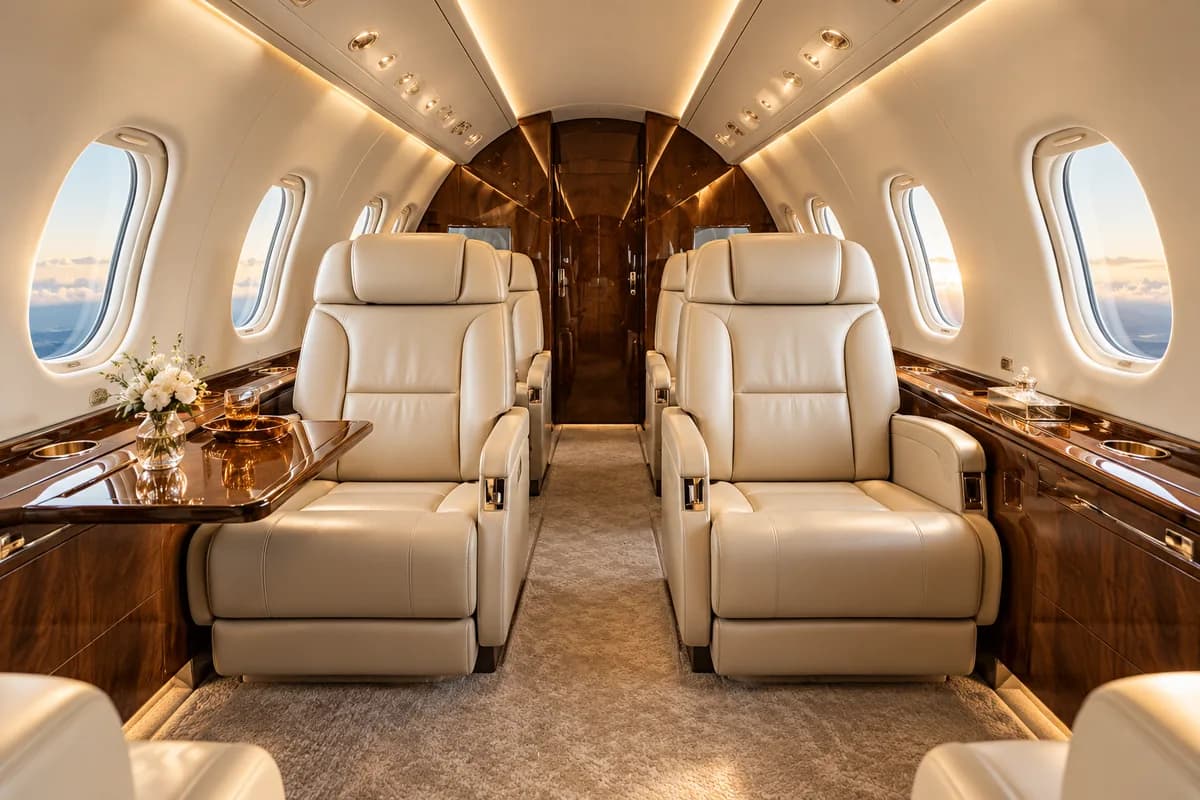
JetNine Card
Refundable deposit. Fixed hourly rate. No peak-day surcharges, ever.
Deposit is yours — applied against flights, refundable if unused after 24 months.
- —Fixed hourly rates by category, locked for 24 months from card activation.
- —No peak-day pricing. Thanksgiving Wednesday at the same rate as a Tuesday in March.
- —72-hour call-out — guaranteed availability with three days notice.
- —Same dispatcher relationship; same vetting protocol.
- —Best fit for 25–100 flight hours per year.
Reserve
Guaranteed availability with as little as 8 hours notice. Dedicated dispatcher. White-glove.
Annual program review. By application — limited number of seats.
- —8-hour call-out — guaranteed airframe in the air, anywhere CONUS.
- —Dedicated dispatcher assigned to your account; same person, every time.
- —Priority access to the largest-cabin airframes during demand peaks.
- —Annual catering & ground-transport allowance included.
- —Best fit for 100+ flight hours per year, time-critical missions.
— Honest comparison
JetNine vs. fractional vs. owning your own.
We’re not the right answer for every flyer — if you fly 150+ hours a year on the same two routes, fractional or whole-aircraft will be cheaper. For everyone else, here’s how the math works out.
FLEXJetNine on-demand | FIXEDJetNine Card | SHARESFractional | OWNWhole aircraft | |
|---|---|---|---|---|
| Annual commitment | NonePay per flight | $100k+ depositRefundable, 24 mo | $200k+ purchasePlus $15–25k/mo mgmt | $10–60MPlus $1–3M/yr ops |
| Hourly rate (midsize) | ~$4,400All-in, market rate | $3,950Locked 24 mo | $5,200Plus monthly | $2,200Direct ops only |
| Aircraft access | ~20,000 worldwide | ~20,000 worldwide | ~200 fleet | 1 (yours) |
| Call-out time | 2–24h notice | 72h guaranteed | 10–24h | 2h (your call) |
| Peak-day surcharge | Market rate | ✓ None | +25–40% | ✓ None |
| Aircraft category | Per flight choice | Per flight choice | Locked to share | Locked to airframe |
| Empty-leg access | ✓ Yes | ✓ Yes + watchlist priority | — No | — No |
| Best for | Under 25hyear | 25–100hyear | 25–50hyear, fixed routes | 200h+year |
— Hourly rates
JetNine Card rates, by category.
Locked for 24 months from card activation. Includes everything except FET (7.5%, federal) and FBO ramp fees. Compare to typical on-demand market rates — the savings are 12–18% on average, more during peak.
| Category | Typical mission | Sample lane | On-demand market | Locked card |
|---|---|---|---|---|
| Light | 3–4 pax · 1,500 NM · regional hops | KVNY → KASE | $3,200–3,600/hr | $2,950/HR |
| Midsize | 5–6 pax · 2,500 NM · transcon | KVNY → KTEB | $4,200–4,600/hr | $3,950/HR |
| Super-mid | 6–8 pax · 3,500 NM · transcon nonstop | KSFO → KMIA | $5,400–5,900/hr | $5,100/HR |
| Heavy | 8–12 pax · 4,500 NM · transatlantic | KJFK → EGLL | $7,800–8,400/hr | $7,400/HR |
| Ultra long range | 12–16 pax · 6,500+ NM · transpacific | KLAX → RJTT | $10,400–11,200/hr | $9,850/HR |
— Card tiers
Three deposit levels. Same locked rates, more perks.
Higher deposits earn faster call-out, larger annual allowances, and elevated empty-leg priority. The hourly rate is the same across tiers — what changes is the service envelope.
Card · 100
Refundable deposit
- —Locked hourly rates for 24 months
- —72-hour guaranteed call-out
- —$2,500 catering allowance / year
- —Standard empty-leg watchlist access
- —One named cardholder
Card · 250
Refundable deposit
- —Locked hourly rates for 24 months
- —48-hour guaranteed call-out
- —$8,000 catering & ground allowance / year
- —Priority empty-leg access — 30 min advance window
- —Up to three named cardholders
- —Direct dispatcher cell number
Card · 500
Refundable deposit
- —Locked hourly rates for 36 months
- —24-hour guaranteed call-out
- —$20,000 catering & ground allowance / year
- —First-look empty-leg access — 60 min advance window
- —Unlimited named cardholders & dependents
- —Annual safety briefing & airframe selection consultation
- —Path to Reserve qualification
— Availability commitment
If we don’t deliver, we make it right.
Guaranteed call-out is a commitment, not a marketing line. If we can’t put an airframe in the air for you within your tier’s window, here’s what happens.
Substitute aircraft
Same category or one tier up, our cost.
Commercial first-class
If no airframe is reachable, we book commercial.
Hour credit
Failed call-out triggers a flight credit.
No questions asked
Triggered by missed window, regardless of cause.
— FAQ
The questions most card prospects ask.
01Is the deposit actually refundable?
+
Yes, in plain terms. The deposit is held as a flight-credit balance. You can fly it down to zero, top it up, or — at any point in the 24-month locked-rate window — request a refund of the unused balance. We process refunds within ten business days, no penalties, no clawbacks. The only thing we don't refund is hours already flown.
02What happens if I run out of deposit balance mid-year?
+
Top it up, in any amount, any time. Or roll back to on-demand for the rest of the year — your locked rate stays in place if you re-load before the 24-month rate window expires. We don't penalize over-flying or charge the higher market rate retroactively; the locked rate is the locked rate.
03Why is this cheaper than on-demand?
+
Two reasons. First, the deposit gives us working capital to negotiate fleet-wide rate commitments with operators on your behalf — savings we pass through. Second, by knowing your annual flying volume in advance, we can place you on operators with capacity gaps, who give us better rates than spot-market lookups. The card is genuinely a discount, not a marketing wrapper. The math is in the comparison table above.
04Are peak holidays really the same rate?
+
Yes, with one nuance: the rate is the same, but availability isn't. Thanksgiving Wednesday and the days around the Super Bowl are genuinely capacity-constrained — even with the card, we can't manufacture airframes that don't exist. Card holders get priority over on-demand bookings, and we recommend booking peak dates 60+ days out. Once confirmed, the rate is your locked rate. Period.
05Can I change tiers mid-year?
+
Up only, any time — top up to a higher tier and the new perks kick in within 48 hours. Down requires written request 30 days before the next anniversary; we'll true up the deposit difference and refund the delta. Rates locked at the original tier carry over for the duration of the 24-month window.
06How does Reserve actually work?
+
Reserve is built around a dedicated dispatcher and a pre-positioned operator pool — we maintain standing arrangements with three to five operators in key metros so that an 8-hour call-out is realistic, not aspirational. It's by application because the operator commitments are finite; we run roughly 40 Reserve seats at any time. If you fly 100+ hours a year and need same-day or next-day flexibility, ask about it on your next call.
07Do I lose my locked rate if I don't fly enough?
+
No minimum hours, no use-it-or-lose-it. The deposit sits there at the locked rate; if you fly five hours in a year, you fly five hours at the locked rate. The 24-month rate window is from card activation, not from minimum-hours benchmarks. The only way to lose the locked rate is to let the 24 months expire without re-loading.
Talk to dispatch. We'll model the right program for you.
Annual hours, typical lanes, peak-day exposure — fifteen minutes on the phone and we'll show you which program saves you money in writing.