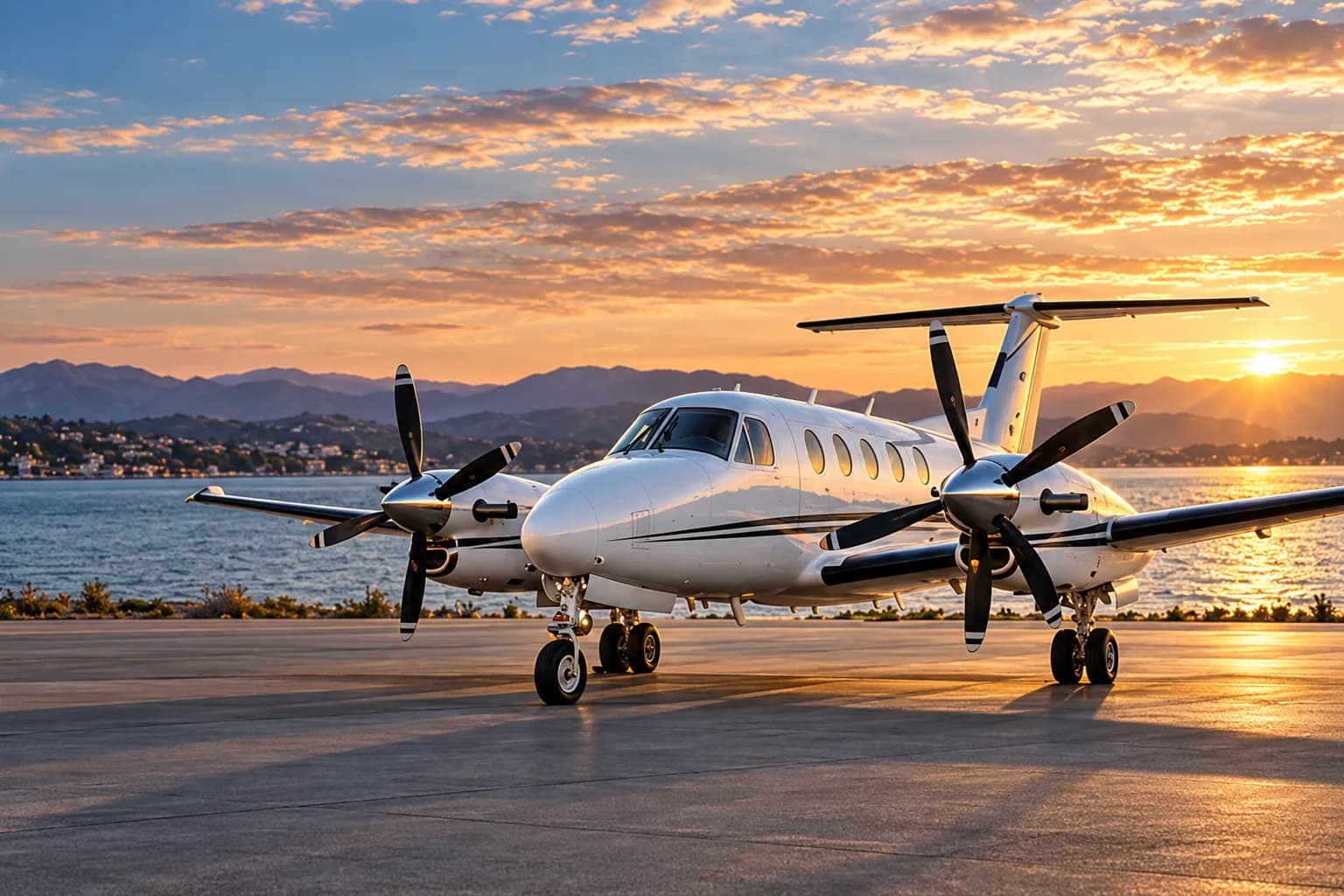
Turboprops.
Short runways, mountain airports, unpaved strips — the airframes that fly where jets can't. Lower hourly than light jets, longer endurance for slow-cruise missions. The right answer when the destination is the problem, not the distance.
TURBOPROP, RAMP MIDDAY— Inside the cabin
Quiet, capable,
field-flexible.
CABIN, FORWARD CLUB
PILOT VIEW
REAR BAGGAGE DOORA typical turboprop cabin runs 16 to 18 feet of length, 4'9" of cabin height, and seats six to nine in club plus aft seating. Refreshment galley, enclosed lavatory on most types, Wi-Fi available on newer airframes. Built for short runways the airline can't touch.
— Sample aircraft
A few airframes
in the network.
Representative examples — we source the right airframe per mission from a network of vetted Part 135 operators. Tail numbers redacted for crew privacy.
KING AIR 350, EXTERIORBeechcraft King Air 350i
PC-12, NIGHT TARMACPilatus PC-12 NGX
TBM 960, RUNWAYDaher TBM 960
— Best for
The missions
turboprop does best.
Mountain airports
Aspen, Telluride, Jackson Hole. Hot-and-high performance the jet category can't match.
Short-runway access
3,000-foot strips, gravel runways, island airfields. The longest list of usable airports in the lineup.
Cost-conscious regional
Lowest hourly in the network. The honest answer when speed isn't the priority.
Single-engine reliability
Modern PT6 and PWC turbines, fully developed for thirty-plus years. The most-flown engine class in business aviation.
— Considering alternatives
Compare the categories
on either side.
Turboprop, ready to go.
Tell us the route. We'll surface the right airframe within minutes — all-in pricing, no surprises.