In this article
The question we field more than any other from first-time clients is how early to arrive for a private jet flight. Our answer, ten minutes before scheduled departure, almost never lands the first time. People have spent two decades training themselves to be at the airline terminal two hours out, and being told to roll up at 9:50 for a 10:00 wheels-up sounds like a practical joke with an expensive punchline. It is not. The entire structure of a charter departure is built around the aircraft waiting for you rather than you waiting for the aircraft, and once you have done it once, the old habit looks faintly absurd.
Why ten minutes is enough
Airline arrival windows are long because you are standing in line behind everybody else's process. Bag drop, security screening, gate change, boarding by zone, the slow shuffle of two hundred people down a jet bridge. Every one of those steps is a queue, and queues need buffer.
At a private terminal, none of those queues exist. There is no security checkpoint for domestic charter passengers, no boarding pass, no zone. Your name is already on the manifest the crew filed. The airplane has been preflighted, fueled and catered before you left the house, because that is what the crew was doing while you were still in traffic. The only two things that have to happen after you arrive are your bags going into the hold and you walking up the airstair. On a normal domestic departure, our average ground time from arrival to wheels-up runs about eight minutes.
Ten minutes, in other words, is not a tight target. It is a comfortable one with slack built in.
What actually happens between the curb and the airstair
Here is the whole sequence, which is shorter than the description of it.
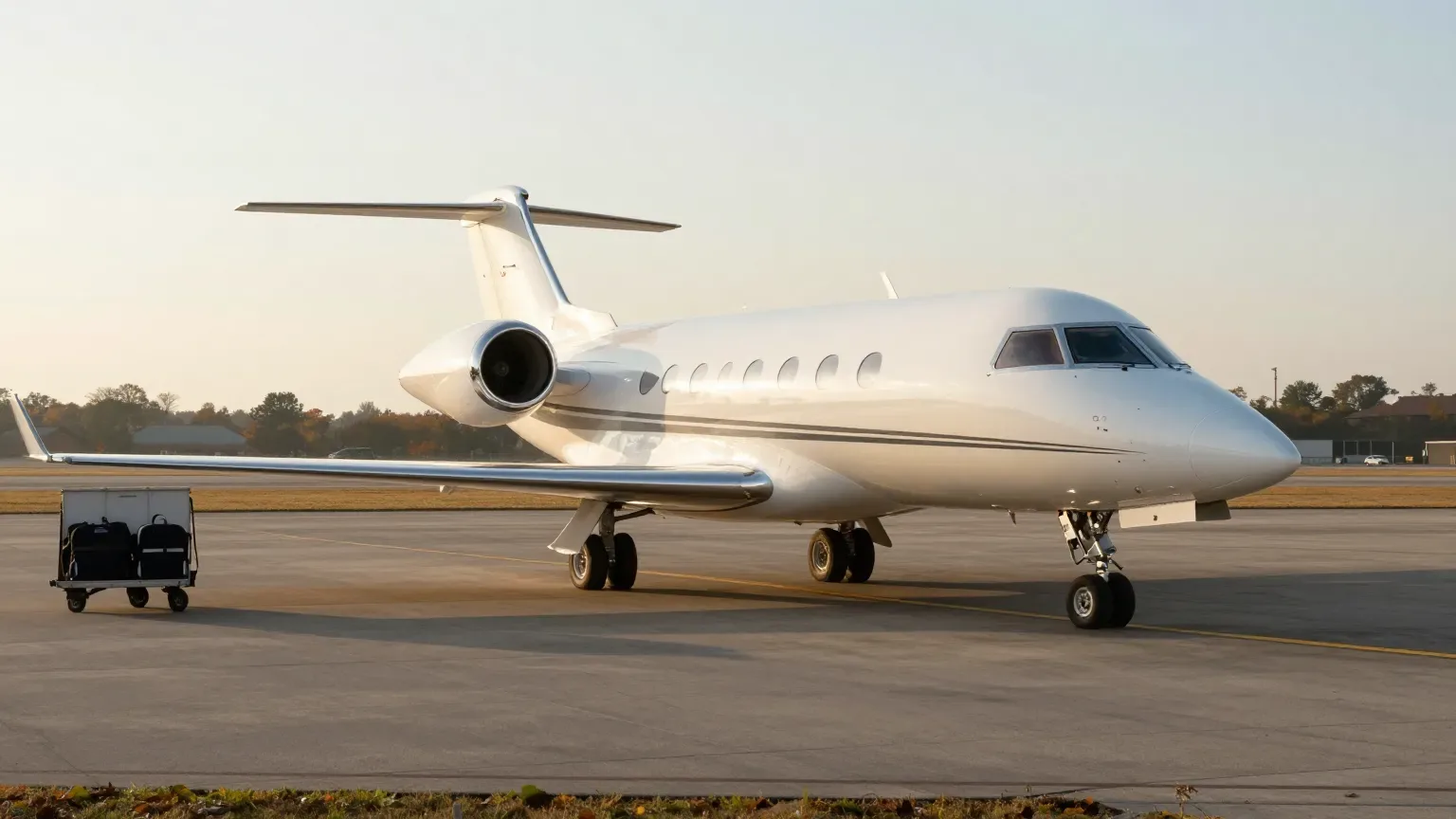
You park at the FBO (fixed base operator, the private terminal), usually within sight of the door. Someone at the desk takes your name. Your driver pops the trunk and a line service technician moves the bags straight from the car to the baggage hold, which is why nobody weighs them or tags them. You show a government photo ID once so the manifest matches the human. If you want coffee there is coffee, and if you want to keep walking, you keep walking.
Then you go through a door onto the ramp, the captain meets you at the bottom of the stairs, and you get on. No gate, no announcement, no group number. The door closes and the airplane taxis. Most of the ten minutes, honestly, is spent on the walk and the small talk.
The four things that actually make people late
In our experience, almost nobody misses a departure because they mistimed the ten minutes. They miss it for one of these reasons instead.
Wrong airport. Private aircraft frequently use a different field than the airlines serve, which is one of the better features of chartering right up until it sends you to the wrong side of a metro area. Read the trip sheet.
Wrong FBO. This is the big one. A single airport can host three or four FBOs on opposite corners of the field, and the drive between two of them can take twenty minutes with a fence in the way. Put the FBO's street address into the maps app, not the airport name.
International paperwork. Customs and border formalities run on their own clock. For an international departure we will ask you to arrive earlier, and we will say so in writing rather than hoping you guess.
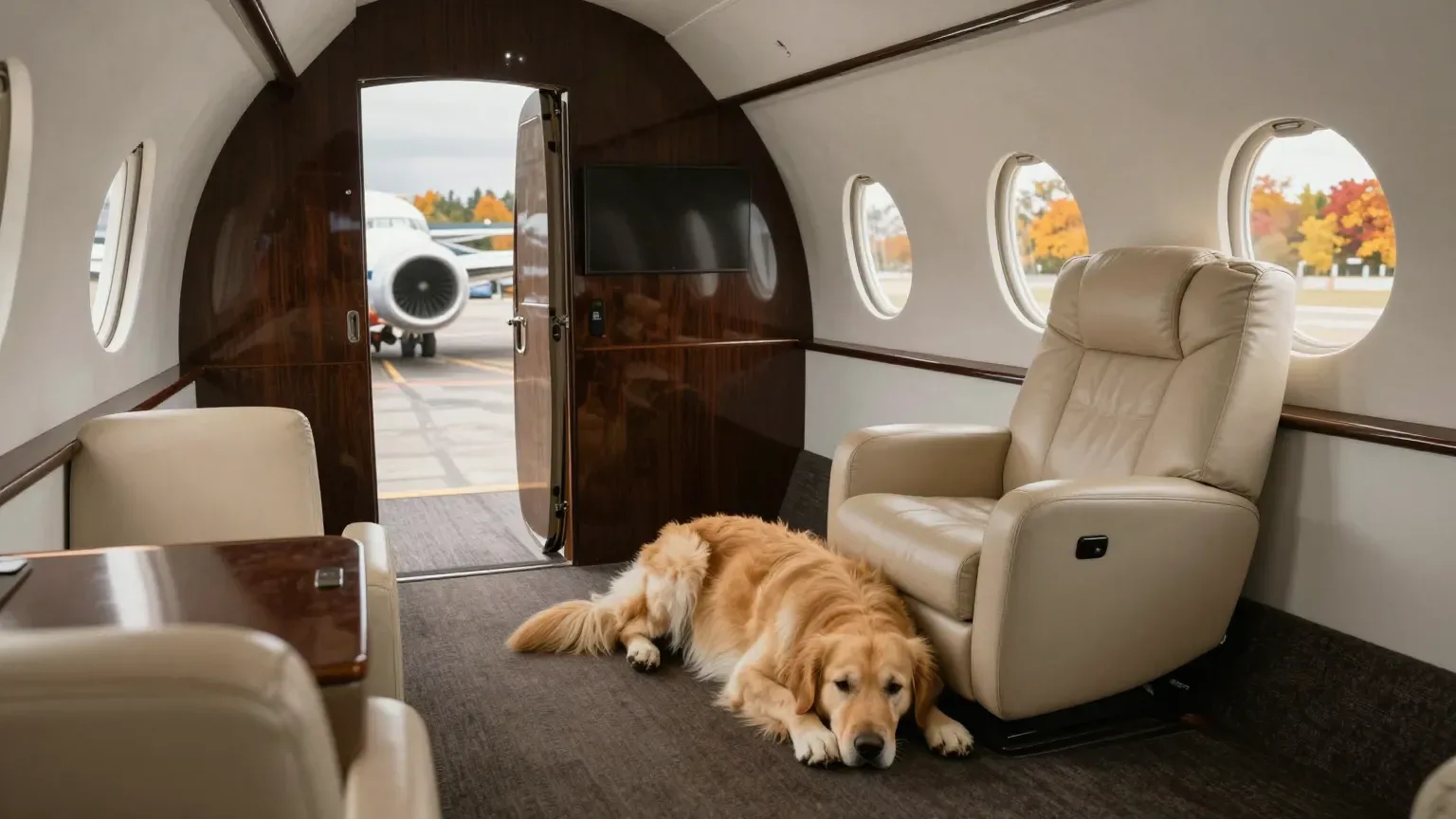
Pets and passenger counts that changed. A last-minute extra passenger needs to go on the manifest, and travelling with a dog has a couple of small requirements attached. Neither is a problem. Both are a problem at 9:58.
When to build in more time
There are legitimate reasons to give yourself a wider window, and none of them are about the boarding process.
Peak weekends at constrained mountain and resort airports are the clearest case. Some fields run slot or ramp reservation programs in their busy season, which means your departure time is a commitment made to air traffic control rather than a preference, and arriving with a cushion protects it. Ski season and holiday weekends both qualify. So does weather in the shoulder months, when a departure gets pulled forward to stay ahead of a system.
Large groups arriving in separate cars are the other case. A party of nine in four vehicles will find at least one vehicle that took a scenic route. If you can, gather at the FBO rather than converging on it.
And here is the part that genuinely surprises people. If everyone is on the ramp early, the crew is legal and the slot allows it, you can simply go early. Departing ahead of schedule is a normal event in charter, not an exception that requires a supervisor. Airlines cannot do this for you. It is one of the quieter pleasures of the whole arrangement.
The trip sheet answers this for your specific flight
None of the above should have to live in your head. Twenty four hours before departure, the final trip sheet lands in your inbox with the FBO name and address, the ground transport details, the crew names, the tail number and the weather brief. It also carries your arrival time for that flight, which is the number that matters, because an international departure out of a busy field and a Tuesday morning hop between two quiet ones are not the same day.
That trip sheet is the last step of a five step process that starts with a route and a date. If you have not chartered before and want to know what to interrogate a desk about before you get to any of this, the pre-booking checklist is ten questions long and takes five minutes. If plans change on you instead, the cancellation policy is a better thing to read early than late.
Booking late, arriving on time
The ten minute rule holds even when the booking itself was rushed. From a confirmed quote, we can generally have you wheels-up in about two hours, which means the departure timeline compresses but the arrival timeline does not. You still show up ten minutes before the time on the sheet. The last minute charter guide covers what does and does not get harder inside that window, and what it does to availability.
The habit is the hard part. For the first few flights you will arrive forty minutes early anyway, sit in a leather chair with a coffee, and watch the crew load your bags. That is fine. Everyone does it. Then one day you will pull up at 9:51 for a 10:00 departure, walk straight onto the airplane, and understand what you have been paying for.
Questions this raises
Asked at the desk
For a normal domestic charter, ten minutes before scheduled departure is enough. The aircraft is preflighted, fueled and catered before you arrive, and average ground time from arrival to wheels-up is about eight minutes. International departures and some peak-season airports need more, and your trip sheet will say so.
There is no TSA checkpoint for domestic charter passengers at a private terminal. You show a government photo ID once so the manifest matches the passenger, and your bags go from the car straight into the baggage hold.
Often yes. If everyone is on the ramp, the crew is within duty limits and any slot restriction allows it, a charter flight can simply depart early. That is a normal event rather than an exception.
Call the dispatcher on your trip sheet as soon as you know. Short delays are usually absorbed without drama, but crew duty limits, airport curfews and slot times are real constraints, so the earlier we know, the more options we have.
Your final trip sheet, sent 24 hours before departure, names the FBO and gives its street address. Use that address in your maps app rather than the airport name, because large airports host several FBOs on opposite sides of the field.
JetNine dispatch desk · Updated September 8, 2026 · how it works · first booking · airports