In this article
Private jet travel with pets is the one part of charter that genuinely beats the airline version, and October is when people remember it. The holiday calendar is filling, the snowbird migration starts in earnest next month, and somewhere in every family group chat there is a dog that nobody wants to put in a cargo hold. The good news is that the animal rides in the cabin. The less convenient news is that "the animal rides in the cabin" is a decision made by the operating carrier, not by us and not by you, and it has to be made before you accept a quote rather than discovered at the airport.
Here is how the desk handles it, what we need from you, and the two dates on the fall calendar that actually matter.
Two approvals, and they are not the same thing
The single most common mistake we see is treating one yes as the whole answer. There are two separate approvals in play on any pet trip.
The first is aircraft acceptance. Every charter flight is flown by an FAA Part 135 certificated carrier, and each of those carriers sets its own pet policy. Most of the operators in our network fly animals in the cabin as a matter of routine. Some restrict by size, weight, species or number. Some charge a cleaning fee, which we itemize in the quote rather than letting it appear afterward. A few will not carry animals on a particular tail at all, usually because of an interior that costs real money to refurbish.
The second is entry permission. Clearance to board an aircraft says nothing about clearance to enter a country, a point our pet travel guide makes at the top of the page because it is the failure mode that ruins trips. Domestic flying inside the United States is simple. The moment a border is involved, you are dealing with destination authorities, health certificates and a veterinary timeline that can run weeks rather than days.
Get both approvals in writing. One without the other is not a plan.
The fall calendar is the actual constraint
Two things happen between now and January that change how early you need to call.
The first is the holiday compression. Thanksgiving week and the stretch from the third week of December into the first days of January are the densest charter periods of the year, and pet acceptance narrows exactly when supply narrows. In normal weeks, if the first aircraft we price does not take dogs, we move to the second. In peak weeks there may not be a second aircraft on that city pair at that hour. The pet requirement stops being a preference and becomes a hard filter on an already short list, which is the practical reason to book earlier than you would for the same trip without an animal.
The second is the snowbird migration. Northeast to Florida demand climbs through November, and a large share of it moves with pets, because the whole point of a six month stay is bringing the household. If you are running New York to Palm Beach with a dog and a cat and four hard cases, that is a different aircraft conversation than the same route with two passengers and carry-ons. Tell us in the first call, not the third.
October is the cheap month to sort this out. Veterinary appointments are available, operators have open calendars, and if a substitution becomes necessary we have time to find a tail that takes your animal rather than one that merely flies your route.
What the desk needs from you
When you quote a trip with an animal, give dispatch the following up front. It is not paperwork for its own sake. Every item below is something an operator will ask us before saying yes, and every round trip of questions costs you a day.
- Species, and breed where the operator asks for it.
- Weight and approximate size, honestly stated. Operators plan restraint and seating around it.
- How many animals, and whether they travel together.
- Carrier dimensions if you are bringing one, or a note that you are not.
- Whether the animal has flown before, and how that went.
- Any medication, mobility or anxiety considerations, which is a question for your veterinarian first and dispatch second.
Service animals run through a separate assistance process rather than the general pet policy, so flag that explicitly and we will handle it on the right track.
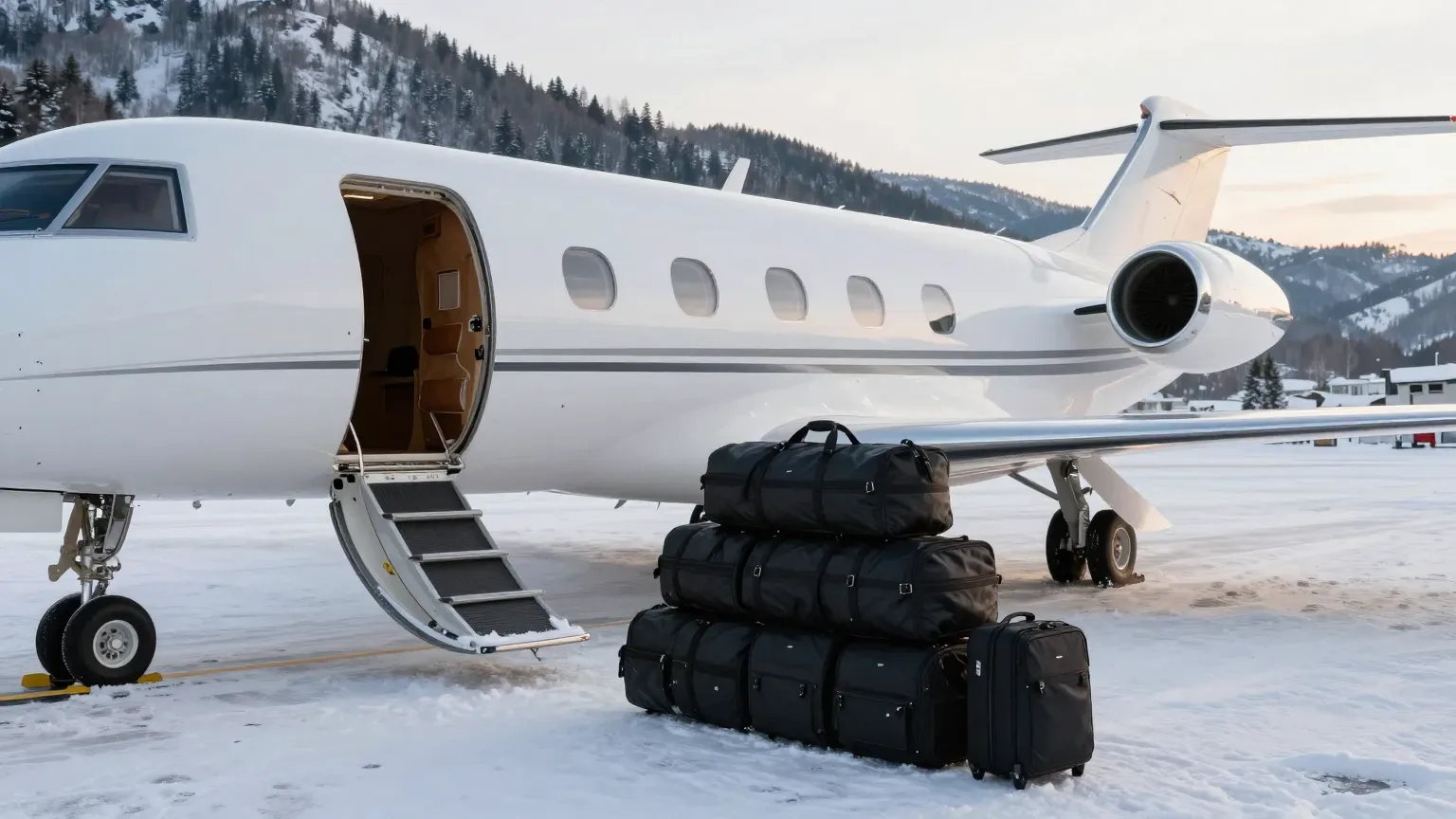
One more piece, easy to forget: pets and baggage compete for the same cabin and hold. A large crate occupies space that a ski bag was going to use. If the trip is carrying both, read our baggage limits guide alongside the pet brief and give us the full manifest at once. Volume, not weight, is usually what bites on a light or midsize cabin.
The cabin plan, settled before departure
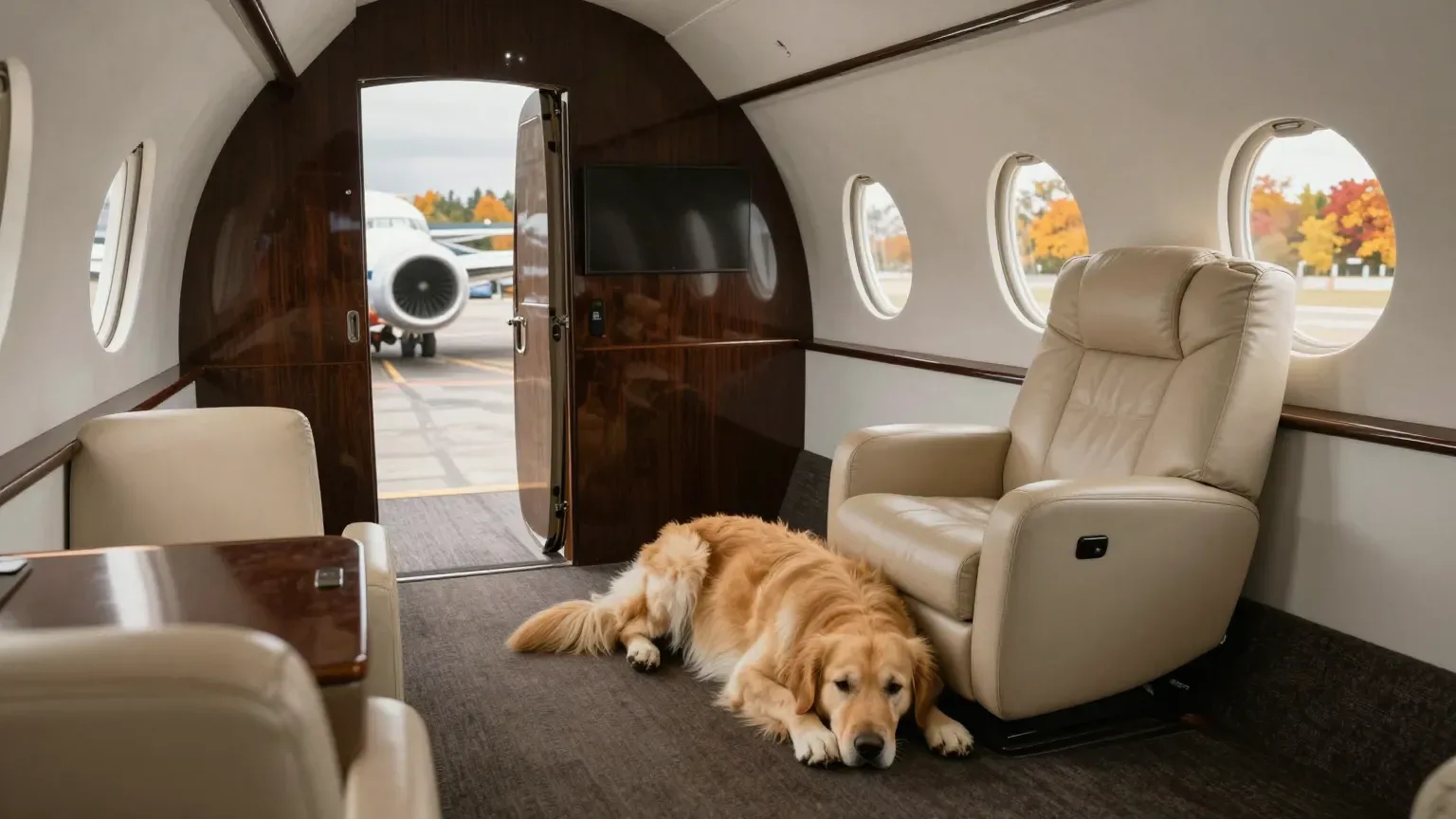
"In the cabin, uncrated on most aircraft" is the honest short answer we give on the dog question page, and it is true. It is not the same as a free roaming animal for the whole flight.
Agree with the operator where the animal travels and how it is secured during taxi, takeoff and landing. That might be a carrier, a harness, a seat, or the floor at your feet, and it varies by aircraft and by carrier policy. Plan water, a liner and familiar bedding. Confirm relief opportunities on the ground, both at the departure FBO and on arrival, and ask about pet friendly ground transport at the far end, because a jet that welcomes your dog does not guarantee a car service that does.
If the aircraft changes, and in peak season aircraft sometimes change, the pet approval does not automatically travel with you. Recheck acceptance, cabin arrangements and fees on the substitute tail. We do that on your behalf, but you should know it is happening rather than assume the original yes still stands.
International trips need a head start
If the mission crosses a border, start the veterinary work now. USDA APHIS guidance for United States travelers is to involve an accredited veterinarian early, because destination requirements often come in a required order: microchip, then vaccination, then test, then certificate, each with its own validity window. Miss the sequence and the paperwork is void even though every individual item exists.
Two things to plan for specifically. Return entry is its own approval, with its own rules, and for dogs coming back into the United States the current CDC guidance depends on the animal's travel history and vaccination circumstances. Do not assume outbound documents cover the return. And confirm where the border check physically happens, because that determines which airport we file into.
The broader document set for a cross border mission is wider than the animal, and dispatch walks it with you. But the pet layer is the slowest moving piece, so in practice it sets the timeline for the whole trip.
Empty legs count too
Discount inventory is not a pets excluded category. Our empty legs board flags pet friendly legs, which means a repositioning flight can work for a four legged passenger exactly as it does for a two legged one. The usual empty leg caveats still apply: the schedule belongs to the original trip, and the whole thing can vanish when that trip changes. But if your dates are soft and your animal is the only complication, it is worth watching.
For firm dates with an animal aboard, price the trip properly. Put the route and passenger count into the cost calculator for a working range, then call dispatch with the pet details so the aircraft we shortlist are ones that will actually take your passenger. Telling us at the quote stage costs nothing. Telling us at the ramp costs a flight.
Questions this raises
Asked at the desk
On most aircraft, yes, and uncrated. Cabin acceptance is set by the operating carrier rather than by the broker, so it has to be confirmed for the specific tail before you accept a quote.
Earlier than you would for the same trip without one, especially around Thanksgiving and the late December peak. A pet requirement filters an already short list of available aircraft, so the fallback options disappear first.
Some operators apply a cleaning fee and a few restrict by size, weight or number of animals. Anything that applies is itemized in the quote before you accept it, not added afterward.
That depends entirely on the destination and the animal. USDA APHIS advises United States travelers to involve an accredited veterinarian early, because requirements often come in a fixed order with their own validity windows, and the return journey is a separate approval.
Some do, and our empty legs board flags the pet friendly ones. The usual empty leg caveat still applies, since the schedule belongs to the original trip and can change or disappear.
JetNine dispatch desk · Updated October 11, 2026 · how it works · first booking · pets · seasonal