In this article
Private jet cancellation is the part of charter nobody wants to read about until it is 6 a.m. and the ramp is wet. It is rare. It is also real, and mid-September is the stretch of the calendar where it stops being theoretical: peak Atlantic hurricane season overlapping with the first serious cold fronts pushing across the Midwest and Northeast. If you are going to find out what your broker's cancellation policy actually says, this is the season that will tell you.
So here is the honest version from the desk. What genuinely takes a charter off the board, what should happen in the next thirty minutes when it does, and the questions worth asking before you sign anything.
Why this comes up in September and October
Three weather systems stack up in the fall and each one breaks flights differently.
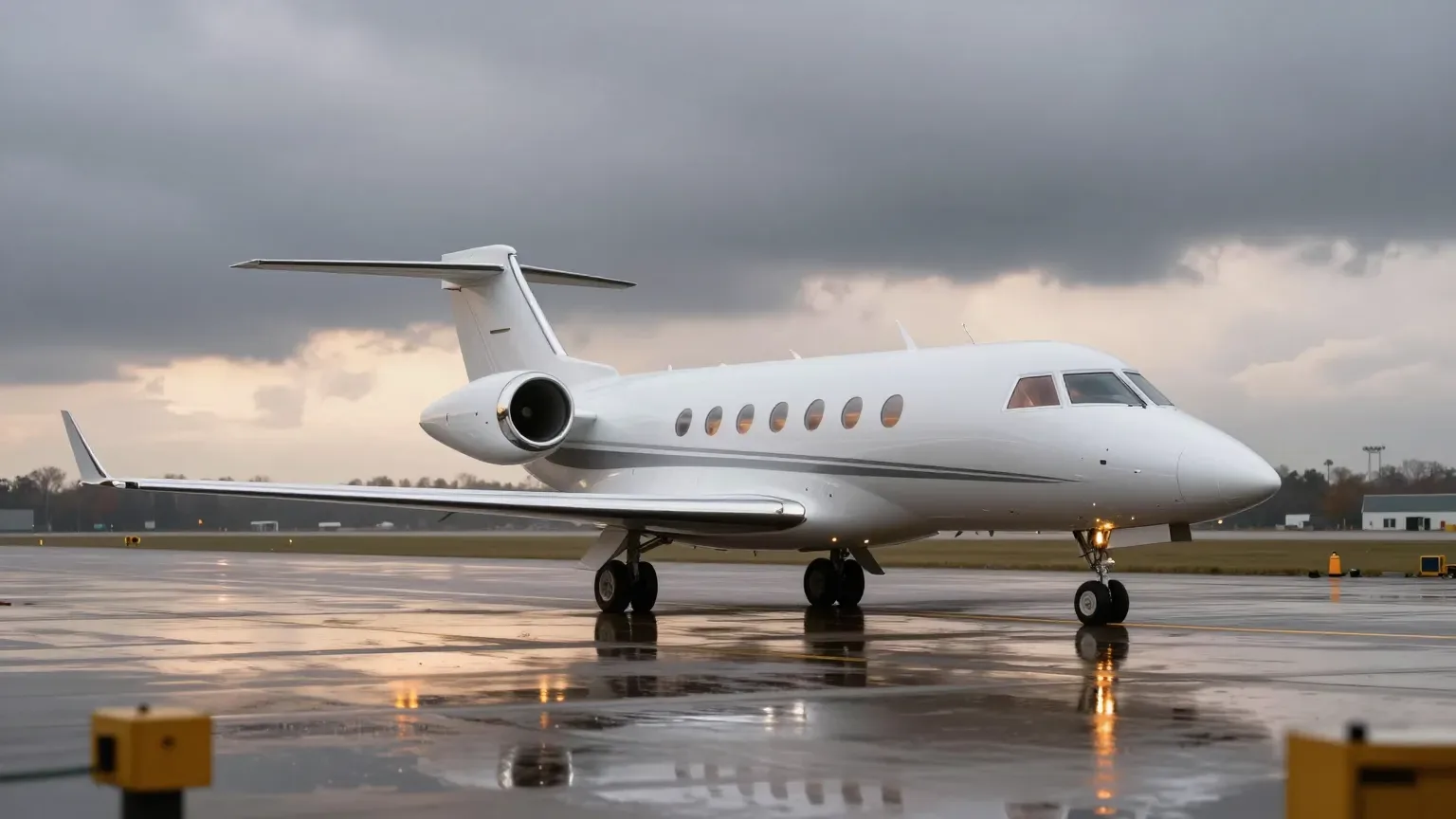
Tropical activity through the Southeast and Caribbean is the loudest. It does not usually cancel a trip outright so much as it moves aircraft: operators reposition airframes out of the cone days in advance, and a jet that was going to be sitting in Fort Lauderdale on Thursday is now sitting in Nashville. That is a repositioning problem, which is a cost and scheduling problem, not a safety one.
Frontal weather is the quieter one. The first real cold fronts of the season bring convective lines that sit across a departure airport for ninety minutes and then move on. Almost nothing about that cancels a flight. It delays it.
Fog is the sneaky one, and it is the one that actually strands people. Coastal New England, the Pacific Northwest, valley airports in the mountain West. A runway with no approach that gets you low enough, a crew that is legal to fly but not legal to land, and a morning departure quietly becomes a noon departure.
Notice what is not on that list: the operator simply deciding not to go. That happens, it is a business failure rather than a weather one, and it is the thing your contract needs to cover.
What actually cancels a charter
Four things, roughly in order of how often we see them.
Mechanical findings. A crew runs the preflight, finds something on the minimum equipment list, and the aircraft is down until it is signed off. This is the system working. An operator who launches on a deferred item they should not defer is the operator you did not want in the first place, which is the whole reason operator vetting exists as a discipline instead of a marketing page.
Crew duty timing. Part 135 crews run on hard duty limits. A three-hour ground delay in the morning can put a crew against the wall for the evening leg, and no amount of goodwill moves that number. Duty limits are not negotiable, and you would not want to be on the aircraft where they were.
Weather that will not clear. Not the storm cell. The airport that stays below minimums, the airport that closes, the mountain field where the wind is out of limits for the airframe.
Aircraft-out-of-position. The trip before yours ran late, diverted, or went mechanical, and the airframe that was supposed to be under you is four hundred miles away. On a single-aircraft operator this is fatal to your trip. On a large fleet it is a phone call.
What that list has in common: almost all of it is knowable before you book, in the sense that the operator's fleet depth, maintenance posture and crew bench determine how often it bites. Price is a poor proxy for any of it.
The three remedies, written down before you book
Here is our position, published and applying to every trip without a membership: if an operator call-out fails, you get one of three written remedies. A substitute aircraft at no additional charge. Commercial first-class rebooking. Or a full refund plus a flight credit.
The important word is written. Everybody in this industry will tell you they take care of clients. The difference shows up in whether the remedy existed on paper before anything went wrong, or whether it gets negotiated while you are standing in an FBO lobby with a phone to your ear and a meeting in three hours. Those are not the same product.
The full policy lives on our what happens if a flight is canceled page. Read it before you need it. If a competitor's version of that page does not exist, that is your answer about their version of that policy.
How a recovery actually runs
The mechanics matter more than the promise, so here is the sequence from this side of the desk.
The operator calls the dispatcher, not you. That is the first thing, and it is worth understanding why it is structured that way: your dispatcher starts sourcing a replacement before they call you, so that the call you get has an option attached to it instead of just bad news. Sourcing on a same-day recovery is a different animal than sourcing a normal quote, because you are hunting availability in a narrow window rather than the best value in a wide one.
What we are looking for, in order: same category or better, same departure field if possible, and a crew that is fresh enough to be legal for the whole trip rather than just the first leg. A slightly larger airframe that is genuinely available beats the perfect match that is theoretically available in four hours.
Then you get the call, with the option, the new timing and what it changes about the pricing (on a call-out failure, nothing: the substitute is at no additional charge). If nothing suitable exists in the window, the conversation moves to first-class rebooking or the refund, same day, and we do not make you ask twice.
The part that surprises first-time charter clients is the speed. Recovery on a rare aircraft in a busy market is slow. Recovery on a common super-midsize in a market with depth can be twenty minutes, which is roughly the same lead time the network supports for last-minute charter generally.
What to ask before you sign
Five questions, and none of them are rude.
- Is the cancellation remedy in writing, and can I read it now rather than after the contract?
- Does it apply to me without a membership or card program?
- What happens to the money, specifically, and how fast?
- If you source a substitute, who pays the difference if it is a larger aircraft?
- Who calls me, and how quickly, when the operator calls you?
If the answers arrive as reassurance instead of specifics, you have learned something useful for free. The five-step process that gets you to wheels-up should be as legible as the one that handles it when wheels-up slips.
The short version
Fall weather does not cancel many private jet trips. It delays a lot of them, repositions a few aircraft, and exposes exactly one thing: whether anybody wrote down what happens next. Book the trip on the operator's safety and fleet depth, price it honestly with the cost calculator, and read the cancellation policy in September rather than in February when you need it.
The desk is open at every hour of every one of those days, including the bad ones. Especially the bad ones.
Questions this raises
Asked at the desk
Operator call-out failures are rare, but they are real: mechanical findings, crew duty timing, weather that will not clear, and aircraft out of position. Fall weather produces far more delays than outright cancellations.
With JetNine you get one of three written remedies: a substitute aircraft at no additional charge, commercial first-class rebooking, or a full refund plus a flight credit. The policy is published before you book and applies without a membership.
Not on a call-out failure. The substitute aircraft is provided at no additional charge, even when the airframe we can actually source in the window is a category above the one you booked.
Usually not. Convective cells and frontal weather delay departures rather than cancel them. The cases that genuinely strand people are airports sitting below landing minimums, closed fields, and winds out of limits for the airframe.
Client-initiated cancellation terms sit in the charter agreement and vary by operator and how close to departure you are. Ask your dispatcher to walk you through those terms before you sign, not after.
JetNine dispatch desk · Updated September 17, 2026 · how it works · first booking · seasonal