In this article
A private jet charter to Fort Lauderdale in the last week of October is a different booking than the same trip three weeks earlier, and the reason has nothing to do with weather. The Fort Lauderdale International Boat Show runs October 28 to November 1 this year, and for those five days the city's charter ramp does roughly a month of work. Then the show tears down, the snowbird season starts in earnest, and the ramp never really empties again until spring. We book through this window every year. Here is what the desk watches.
Executive is the airport, FLL is the exception
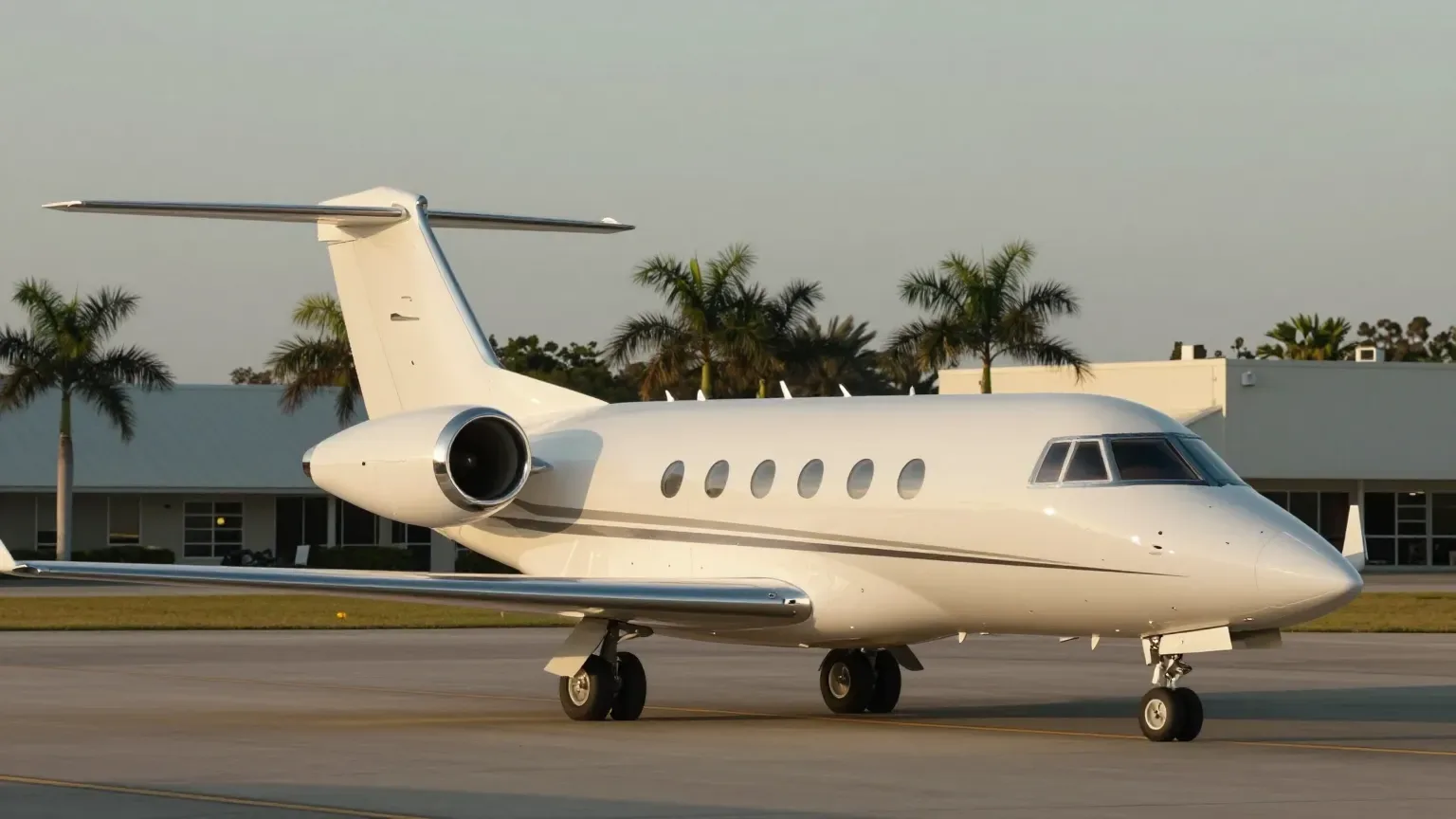
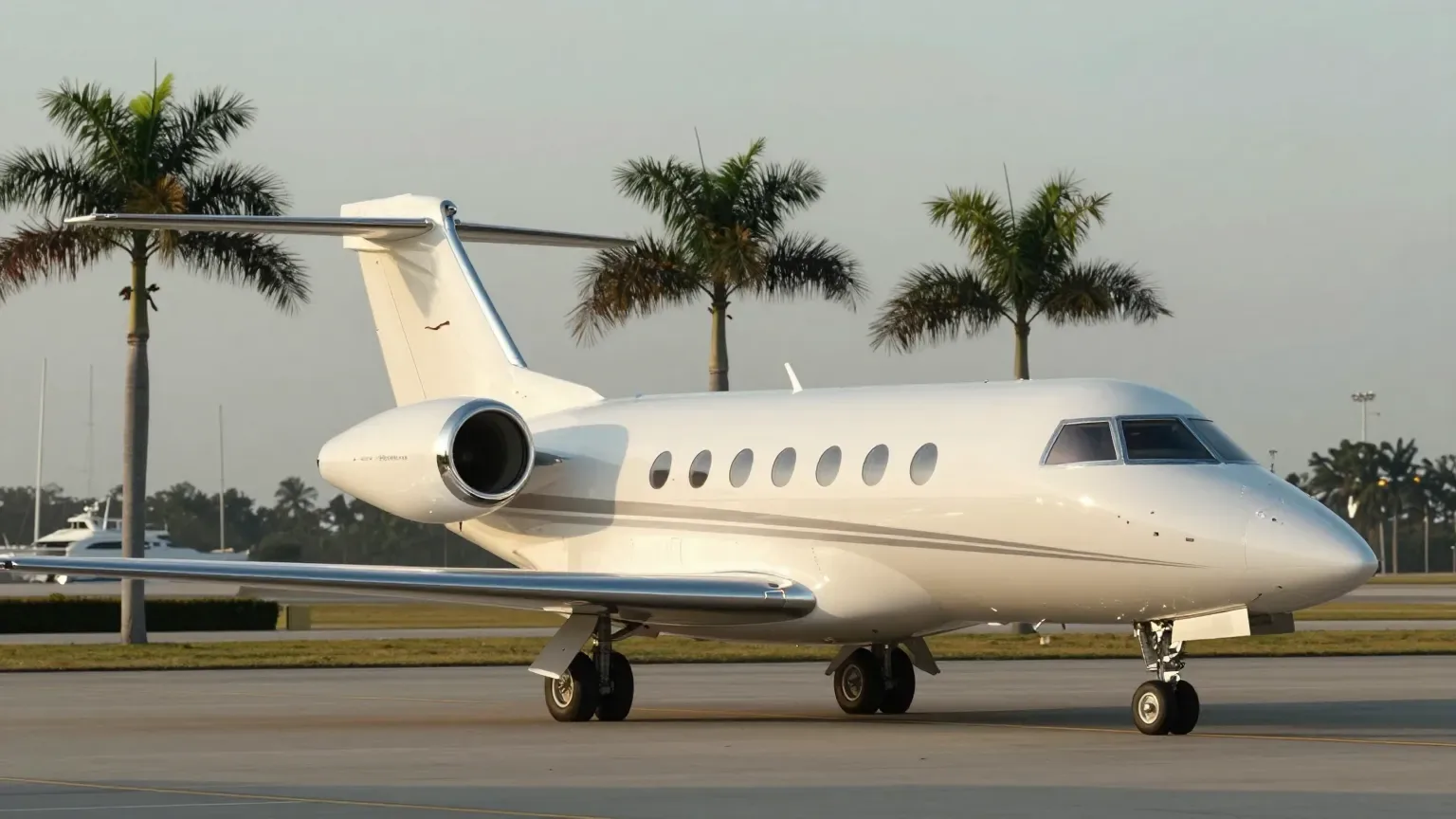
Almost every charter we price into this market lands at Fort Lauderdale Executive (FXE), not Fort Lauderdale-Hollywood International. Executive exists for exactly this traffic. It has the private terminals, it sits about eight miles from Las Olas and the beach, and it does not put a light jet in sequence behind an airline bank. The Fort Lauderdale city page lists both fields and the drive times that actually decide which one you want.
FLL earns its place in two situations. The first is an itinerary that connects to a scheduled airline flight, where putting the passenger inside the terminal is the whole point. The second is an international trip that needs FLL's infrastructure. Neither of those is the common case, and if you ask for FLL by name without one of them, we will ask why before we quote it.
The practical version: give dispatch the actual street address on each end. Not the city, the address. The field picks itself after that, and in Fort Lauderdale it picks Executive about nine times out of ten.
Boat show week compresses everything
What show week changes is not flight time. It is ground.
Transient parking is the first thing to tighten. Aircraft that arrive Wednesday and leave Sunday occupy a spot for four days, and South Florida FBOs only have so many spots. When the ramp fills, operators start repositioning crews and aircraft to satellite fields, and that reposition shows up in the quote whether or not anyone itemizes it that way. A trip that would have been a simple there-and-back in mid October becomes a four-leg operation in the last week of it: positioning in, dropping, going somewhere to sit, coming back.
The second thing is departure clustering. On the final afternoon of the show, a great many people decide at roughly the same hour that they are done. Ramp and tower both feel it. If you have any flexibility at all, a morning departure on the closing day costs you nothing and buys you a calmer ground operation than a 4pm one.
The third thing is catering and ground transport, which are the quietest failure points of the week. Both are booked solid by local demand that has nothing to do with aviation. Tell us what you need on board when you ask for the quote, not the night before.
None of this means the week is unbookable. It means the week rewards specificity. If you want to see how the variables move before you talk to anyone, run the trip through the cost calculator, which prices the same way dispatch does and shows the category the mission actually wants.
The Bahamas leg that gets added on Thursday
Nassau is a little over an hour from Executive in a light jet. This is close enough that it is not really a trip, it is an afternoon, and every year a handful of show itineraries grow a Bahamas leg somewhere around Thursday when someone's plans change.
We are happy to fly it. The thing that bites people is that it is an international departure with everything that implies: passports for every passenger, customs and immigration on both ends, international handling fees that sit outside the all-in domestic number, and an operator whose certificate and insurance actually cover the operation. Not every Part 135 certificate does, and not every aircraft sitting on the Fort Lauderdale ramp that week is on the right one. Added at noon for a 2pm departure, that becomes a problem. Added the night before, it is a phone call. The Miami to Bahamas route page covers the same crossing from the other South Florida field and is the fastest way to see what the leg involves.
If there is a chance of a Bahamas hop, say so when you book the original trip. We will put you on an aircraft and an operator that can do it, and the option costs nothing if you never use it.
What the week after looks like
The show ends November 1, and the market does not go quiet. It flips.
From early November the dominant flow in and out of South Florida is seasonal: people coming down for the winter and the service traffic that follows them. Fort Lauderdale shares that calendar with Palm Beach and the rest of the coast, which is why the booking window from here to January behaves more like a ski market than a beach one. Lead times stretch, preferred departure slots go first, and the aircraft that would have been available on two days' notice in September are spoken for.
One useful side effect: the traffic is directional. A lot of aircraft arrive full and leave empty from early November on, which is when southbound-return empty legs start appearing on the Florida lanes in volume. They are still what they always are, which is someone else's schedule offered at someone else's price, but the supply is real in November in a way it is not in August.
How to brief the desk for this week
Four things make a late-October Fort Lauderdale quote come back fast and accurate.
Give the real addresses, both ends. Give passenger count and luggage honestly, because show week luggage is not normal luggage and a bag count that is wrong by three changes the aircraft. Say which parts of the schedule are flexible, because in a compressed week flexibility is the thing we can actually trade for a better aircraft or a better slot. And flag any possible added legs, Bahamas or otherwise, before the operator is selected rather than after.
On timing: the quote itself is fast, but the inventory is not infinite, and during show week the gap between asking and booking is where trips get lost. Our general answer on lead times lives on the how far in advance should I book page, and for this particular week the answer is firmly at the early end of it.
Every aircraft we quote out of Executive flies for an audited operator that cleared our vetting, FET is in the number you see, and the exact tail gets confirmed by dispatch rather than promised by a website. That part does not change in show week. Everything around it does.
Questions this raises
Asked at the desk
Fort Lauderdale Executive (FXE) handles almost all charter traffic and sits about eight miles from Las Olas and the beach. Fort Lauderdale-Hollywood International (FLL) is used when the trip connects to an airline flight or needs its international infrastructure.
Earlier than you would any other week in October. Transient parking and preferred departure times go first, and the final afternoon of the show is the single most contested slot of the week.
Yes, Nassau is a little over an hour from Executive in a light jet. Tell dispatch before the operator is selected, because the aircraft needs an operator approved for the international operation and every passenger needs a passport.
Flight time does not change, but ground does. When the ramp fills, aircraft reposition to other fields between legs, and that extra flying is part of what you are paying for.
Yes, the 7.5% federal excise tax is inside the all-in number on domestic charter. International handling on a leg like Nassau is itemized separately.
JetNine dispatch desk · Updated October 21, 2026 · fort lauderdale · cities · seasonal · events