In this article
Private jet charter fees are where a quote either earns your trust or quietly loses it. The airframe time is the number everyone looks at, and it deserves the attention, because it dwarfs everything else on the invoice. But the lines underneath it are the ones that generate the phone calls, and late September is exactly when they start to move. De-icing season is a few weeks out for the northern half of the country, ski country is already taking bookings, and the ramp fees that sat quietly all summer are about to get company.
Here is what a charter quote actually contains, which parts are itemized separately, and which of them you have any leverage over.
What the number already covers
Start with the part nobody explains. On a JetNine quote, the price you accept already includes flight time, fuel, the two-pilot crew, landing fees, any repositioning the mission requires, the 7.5% Federal Excise Tax, standard catering, and a sedan transfer curb to FBO. That is not an industry standard, it is a choice about where the line sits, and it is the reason our quotes look higher than some and identical to the final invoice.
Three things get itemized separately rather than folded in: premium catering, de-icing, and international handling. Those are the ones worth understanding, because they are the ones that vary by weather, border and appetite rather than by aircraft.
The fuel component is worth a sentence of its own. It is indexed to the weekly Jet-A spot price, which is why two identical trips a month apart can differ slightly. On our quotes it locks at acceptance. If the market moves after you sign, that is our problem, not a surcharge that appears later. The full anatomy of the six numbers lives in what actually moves a charter price.
De-icing, and why the calendar matters
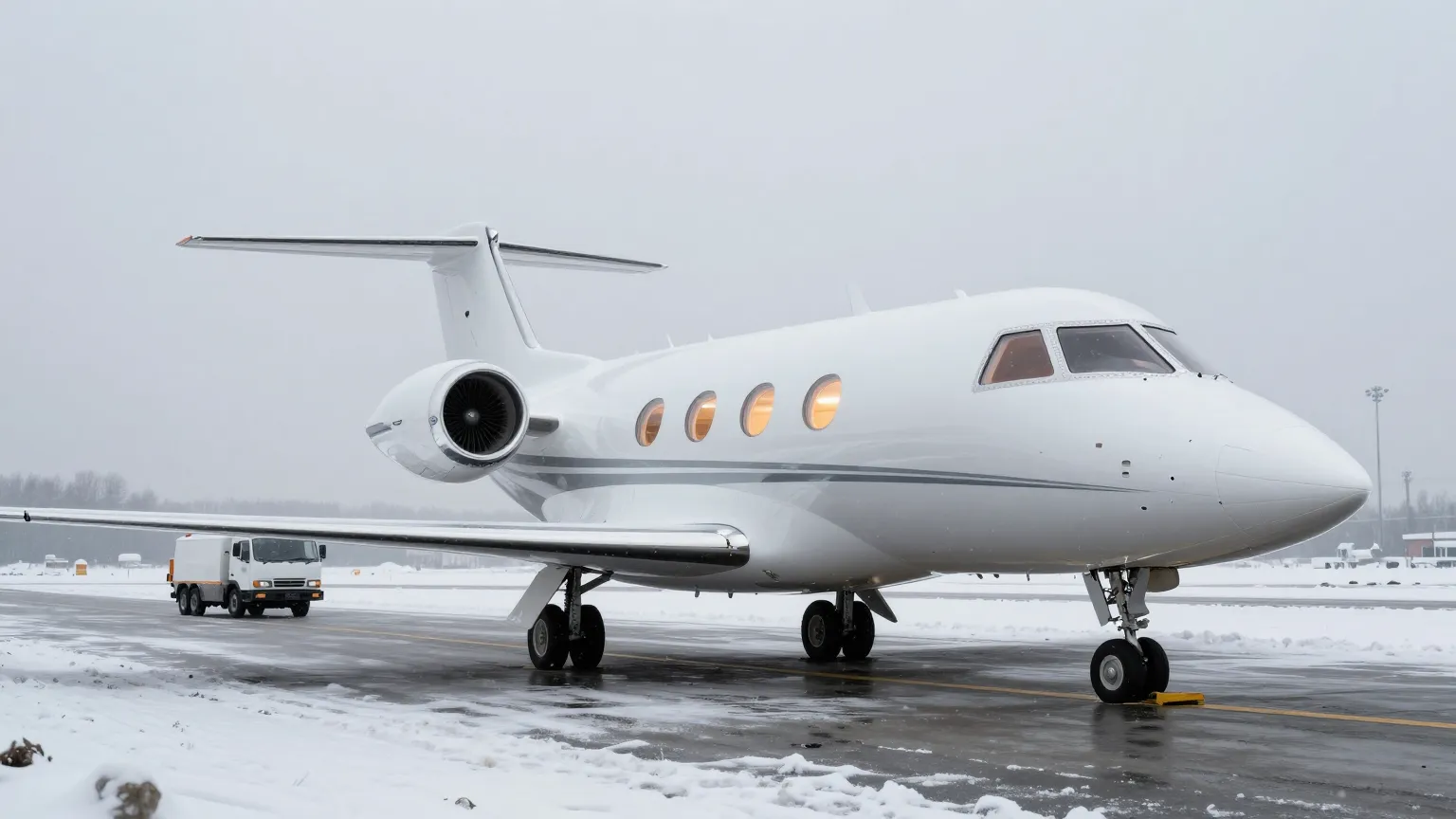
De-icing is the seasonal line. From roughly October through March, depending on how far north you are flying and what the morning looks like, an aircraft with frost, ice or snow on its critical surfaces is not legal to depart until it has been treated. This is not a preference. Contaminated wings change how an airframe flies, and the rule exists because of accidents that taught the industry that lesson the hard way.
The cost varies with three things: how much fluid the aircraft needs, which is a function of size and how bad the contamination is; what the FBO charges for the truck and the crew, which differs airport by airport; and whether you need a second application because the holdover time ran out while you sat in a departure queue. None of that is knowable at quote time in September for a flight in January, which is precisely why it is itemized rather than guessed at and baked in.
What you can do about it is mostly scheduling. A mid-morning departure out of a cold-weather airport often costs less to de-ice than the first flight of the day, because the sun has done some of the work. It also tends to be less rushed. If you are flying into ski country this winter, the New York to Aspen route page covers the winter operating picture for those airports in more detail.
Repositioning: the line with a lever on it
Repositioning is the fee with the most room in it, and the one most people never think to ask about. If the right aircraft is not already sitting near your departure airport, it has to fly there empty, and that flying is real. On our quotes it is priced in rather than added later, but priced in still means paid for.
The lever is flexibility. Shifting a departure by a day, or accepting a secondary airport thirty minutes further out, can change which airframes are realistically available and therefore how far one has to travel to get to you. This is also the whole economic basis of empty legs: an empty leg is simply somebody else's repositioning flight sold to a passenger who happened to want that direction on that day. The discount is real, the catch is that the schedule belongs to the aircraft, not to you.
If you want to see how repositioning behaves on your particular route before you talk to anyone, the cost calculator runs the same engine our quotes do.
International handling and the paperwork lines
Cross a border and a category of cost appears that has nothing to do with flying. Overflight and landing permits where they apply, customs and immigration coordination on both ends, a handling agent at the foreign field, and in some jurisdictions navigation charges billed after the fact by the country you flew through. None of these are large next to the airframe time. All of them are real, and they are the reason international quotes take longer to assemble than domestic ones.
One piece of good news on the tax side: the 7.5% Federal Excise Tax applies to domestic charter. International flights are treated differently under the tax code, which surprises people who assume every line gets bigger when you leave the country. The short version is on our federal excise tax page.
Catering, ground and the small lines
Standard cold catering and a standard bar ride included. Premium tiers, specific sourcing, a particular bottle, a meal from a named restaurant near the FBO, all of that is itemized before you accept rather than discovered afterward. The same logic applies to ground: a sedan is in the number, an SUV or a second vehicle is a line.
These are the smallest figures on any invoice, and they are also the first and last impression of the trip, which is a decent argument for deciding them deliberately instead of at the ramp. Ask for the itemization when you get the quote. Any desk that will not produce one is telling you something.
How to read a quote before you sign
Four questions settle almost everything.
First, is the 7.5% FET printed on the quote? If it is not, the quote is not cheaper, it is incomplete, and that number will find you later.
Second, is repositioning shown as its own line, and is it zero or not? If it is not zero, ask what a different date or a nearby airport would do to it.
Third, what is explicitly itemized rather than included? De-icing and international handling belong on that list in the fall and winter. Premium catering belongs there always.
Fourth, is the fuel component locked at acceptance, or does it float? A quote that floats is an estimate wearing a quote's clothes.
The per-hour picture behind all of this is in our charter pricing guide, and if you are pricing a trip in the next few weeks, our note on fall shoulder season pricing covers what the calendar is doing to availability right now. Dispatch is open either way, and we would rather answer the fee question before you book than explain it after.
Questions this raises
Asked at the desk
On a JetNine quote, flight time, fuel, the two-pilot crew, landing fees, any required repositioning, the 7.5% Federal Excise Tax, standard catering and a sedan transfer are already in the number. Premium catering, de-icing and international handling are itemized separately.
De-icing cost depends on the weather on the day, the size of the aircraft, the FBO handling it and whether a second application is needed. None of that is knowable weeks in advance, so it is itemized at actual cost rather than guessed at and built into the base price.
Not always, but you can often shrink them. Flexing your date or accepting a nearby secondary airport changes which aircraft are realistically available, which changes how far one has to fly empty to reach you. Empty legs are the same economics from the other direction.
The 7.5% Federal Excise Tax applies to domestic charter. International flights are treated differently under the tax code, though other costs such as permits, customs coordination and foreign handling agents apply instead.
Check that the 7.5% FET is printed, that repositioning appears as its own line, that de-icing and international handling are named as itemized items, and that the fuel component locks at acceptance rather than floating until departure.
JetNine dispatch desk · Updated September 28, 2026 · pricing · seasonal · how it works